
A New World Order? The BRICS Summit Could Change Everything This July
 By PNW Staff May 13, 2025
Share this article:
This July, leaders from across the globe will converge on Rio de Janeiro for what may be the most consequential BRICS summit to date. The stakes are high and the implications global. What was once a modest economic club of emerging nations has transformed into a powerful bloc capable of redefining global power structures. And with a growing list of countries formally applying to join BRICS--and even more expressing interest--it's clear the world is no longer content to revolve around Washington, Brussels, or London.
This isn't a mild evolution in global trade relations--it's a geopolitical pivot with teeth. The current trajectory of BRICS threatens to accelerate the decline of U.S. financial influence, fragment the post-World War II order, and undermine the dollar's position as the backbone of global trade.
From Five to a Fortress: The Expansion of BRICS
BRICS began as a loose coalition of Brazil, Russia, India, China, and South Africa--five regional powers frustrated with Western-dominated financial systems and global governance. But the bloc's ambitions have evolved dramatically.
As of 2024, BRICS officially added Egypt, Ethiopia, Iran, the United Arab Emirates, and Indonesia--a move that broadened its geographic, economic, and strategic reach. These are not just economic partners. Indonesia brings G20 stature and regional clout. Iran and the UAE influence Middle Eastern energy markets. Egypt and Ethiopia represent key players on the African continent.
Now, a second wave is forming. Among those seeking formal entry are Turkey, Thailand, Pakistan, and the Republic of the Congo, while major regional players such as Saudi Arabia, Kazakhstan, Nigeria, and Malaysia have signaled varying levels of interest. With so many countries seeking alignment, BRICS is no longer simply a coalition--it is becoming an alternative axis of global influence.
What's Driving This Expansion?
Three core factors are accelerating BRICS' appeal:
Weaponization of the Dollar: U.S. sanctions and restrictions on access to global banking networks have sent a clear message--economic independence from Washington is a strategic imperative. After witnessing Russia's financial isolation, other nations are eager to diversify.
Discontent with Western Institutions: Many developing nations view the current global order as outdated and unbalanced. Institutions like the IMF and World Bank are often criticized for imposing Western-centric conditions. BRICS offers a platform that promises respect for national sovereignty and multipolar leadership.
China's Strategic Push: China's Belt and Road Initiative, its growing trade with the Global South, and its efforts to internationalize the yuan are creating gravitational pull. BRICS, especially when championed by China, offers a soft landing for those seeking to hedge against Western dominance.
De-Dollarization and Its Consequences
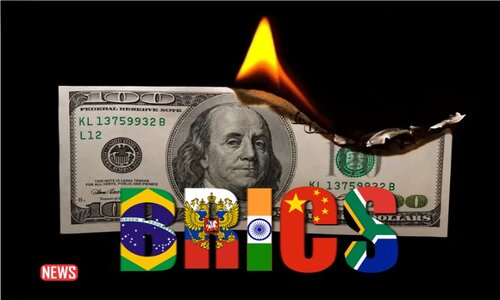
One of BRICS' most disruptive ambitions is de-dollarization--a coordinated effort to reduce reliance on the U.S. dollar for global trade and reserves. The alliance has explored the idea of a shared currency, strengthened bilateral trade in local currencies, and developed systems outside of SWIFT to handle cross-border transactions.
For decades, the dollar has been the world's reserve currency, giving the U.S. unmatched economic clout. If BRICS successfully challenges that supremacy, the fallout could be significant:
Higher borrowing costs for the U.S. government as demand for Treasury bonds wanes.
Rising prices for consumers due to a weaker dollar and reduced import leverage.
Weakened sanctions enforcement, as BRICS countries develop parallel systems immune to U.S. controls.
Increased economic instability, as markets navigate a more fragmented currency regime.
This is no longer a theoretical discussion. Countries like China and Russia already conduct the bulk of their trade in their own currencies. India, Brazil, and the UAE are also moving in this direction. As these shifts accelerate, the dollar's dominance--once unquestioned--may soon face serious erosion.
From Economic Bloc to Strategic Alliance
Even more concerning than BRICS' economic ambitions is the possibility of deeper political and military alignment. While the member states vary in ideology, many are united by a shared resistance to U.S. dominance and a desire to reshape international norms.
Signs of this are already visible:
Russia and China continue to deepen military ties, holding joint naval exercises and sharing defense technologies.
Iran and the UAE, despite historic tensions, now find themselves inside the same economic orbit.
Turkey, a NATO member, is signaling interest in BRICS, reflecting growing friction with Western allies.
A more dangerous evolution would be the formalization of diplomatic and military cooperation within BRICS--potentially creating a counterweight to NATO, G7, and Western-led coalitions. This would not only strain global diplomacy but could redraw the fault lines of future conflicts, making them less predictable and more multipolar in nature.
A Final Warning to the West
The West is standing at the edge of a major inflection point. The 2025 BRICS summit could mark the symbolic unraveling of the Western-led global order--not through open confrontation, but through the slow, strategic redirection of global loyalty and leverage.
If U.S. policymakers fail to respond--by investing in multilateral relationships, reforming global financial institutions, and modernizing trade diplomacy--they risk being outmaneuvered in the very arenas they once dominated.
Power is no longer maintained by inertia. Influence now requires agility, credibility, and global consensus. And if the West continues to rest on its legacy rather than innovate its leadership, it may soon find that the world has quietly moved on.
The Rio summit could well be remembered not as a footnote in global economics--but as the day the tide truly turned and a new economic order began.