When Democrats Put Christ On The Ballot, Which Christ Are They Preaching?
 By PNW Staff October 31, 2026
Share this article:

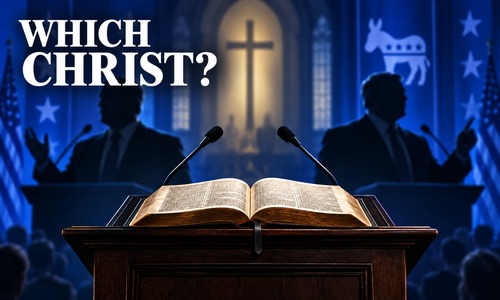
Pastoral titles and Bible verses can make a political campaign sound like a Christian witness. But a candidate's use of Jesus' name does not tell voters whether he is faithful to Jesus' teaching. That question has to be answered by examining the whole message: what a candidate affirms, what he rejects, and what he leaves out.
That is the challenge facing Christian voters as Democrats James Talarico in Texas and Adam Hamilton in Kansas place their faith near the center of their campaigns. Talarico invokes Scripture against Christian nationalism and calls for "flipping tables." Hamilton presents himself as a pastor and bridge-builder. Both are seeking to reach voters who may be wary of Republicans or dissatisfied with the candidates on the other side.
There is nothing wrong with a Christian running for office, and no political party owns the name of Christ. Christians should scrutinize conservative candidates who use religious language while acting against biblical principles, too. But a campaign does not become Christian simply because its candidate quotes Scripture, serves as a pastor, or speaks about protecting the vulnerable.
When Scripture Is Made to Say the Opposite
Talarico's religious language raises more than a question about political style. In a Texas House prayer, he described God as "nonbinary," drawing on the biblical statement that humanity was created male and female in God's image. But Genesis is describing human beings as male and female; it is not presenting God as a nonbinary being. The passage does not support turning God into a reflection of today's gender politics.
His defense of abortion rights also raises a direct conflict with a historic Christian understanding of the value of unborn life. Talarico has argued that the Bible's account of Adam receiving life with his first breath means Scripture does not establish life before birth. But the Bible's description of Adam's creation is not a teaching that human life has no value in the womb. Scripture portrays God as knowing and forming people before birth. A campaign cannot settle the question by selecting one passage and ignoring the wider biblical witness.
These are not minor disagreements over how to fund a program or regulate an industry. They touch the nature of God, the meaning of human life, and the authority of Scripture. Voters should ask whether the Bible is shaping the candidate's views--or being recruited to defend positions he has already chosen.
Pastoral Credentials Don't Settle the Question
Hamilton's pastoral reputation may open doors with Christians who are less engaged in politics. But his public theology also deserves careful scrutiny. He has said that someone can follow Jesus without believing in the Virgin Birth. That makes a foundational claim of the Christian faith sound optional. The birth of Christ is not an incidental detail in the Gospel accounts; it is bound up with who Jesus is and the Christian confession that God entered the world in a unique way.
Hamilton has also supported greater LGBTQ inclusion in the United Methodist Church, including the church's acceptance of same-sex relationships and clergy. Many Christians see that as a departure from Scripture's teaching on marriage and sexual morality. Welcoming every person to hear the Gospel is not the same as redefining sin or blessing conduct the Bible calls outside God's design. A pastor's compassion cannot make a biblical boundary disappear.
A Campaign Slogan Is Not the Whole Gospel
"Flip the tables" is an arresting political slogan. But Jesus overturned the tables in the temple because worship had been corrupted. The scene was not a blank check for any politician who wants to cast his opponents as enemies of justice. Before turning the episode into a campaign message, voters should ask what Jesus was confronting--and whether the candidate is applying the passage faithfully or borrowing its force for partisan purposes.
The same test applies to appeals to the vulnerable. Caring for the poor, the stranger, and the suffering is not a political accessory; Scripture repeatedly commands it. But Christian faith cannot be reduced to a social program or a list of public-policy goals. The Gospel also speaks of sin, repentance, holiness, judgment, forgiveness, and salvation through Christ. A candidate who emphasizes compassion while treating the rest of biblical teaching as outdated or optional is presenting a selective Christianity.
Follow the Teaching, Not the Branding
Christian voters should not assume that a candidate is faithful simply because he is a Democrat, a Republican, a pastor, or a frequent Scripture-quoting speaker. Jesus warned that religious appearances can conceal a different reality. His standard was not a polished spiritual image, but the fruit of a person's life and teaching.
The religious left is making a deliberate play for voters who care about faith but feel politically homeless. That effort may succeed, particularly among Christians who are less tied to party identity. But the central question is not whether these candidates can sound religious. It is whether their understanding of Christianity can withstand the scrutiny of Scripture.
Christ is not a campaign symbol to be reshaped for whichever coalition needs his name. Christians should listen carefully when candidates invoke him--and then compare their message with the Christ revealed in the Bible, including the teachings that are hardest for a modern political movement to accept.