
A 90-Day Doomsday Plan? The Pentagon Prepares For A Crippled Homeland
 By PNW Staff October 27, 2026
Share this article:

For months, we have been reporting on Europe’s preparations for emergency scenarios, including the possibility of military conflict and disruptions to essential services. Now the Pentagon has unveiled its own effort to prepare America for a crisis that could knock out power, cripple supply chains and threaten military operations on U.S. soil.
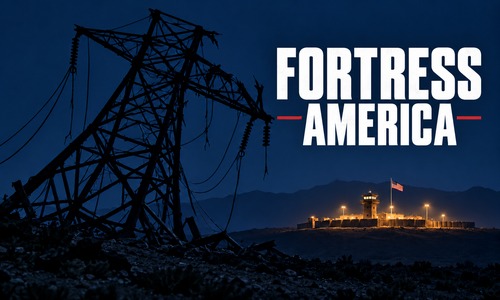
The plan is called FORTRESS America. Much of it sounds like prudent preparation: keep bases supplied, secure backup power and make sure factories can produce what the military needs. But the scale raises a harder question. Why is the Pentagon planning for American military installations to survive for 90 days without outside support? Is this simply responsible planning—or a sign that military leaders see a level of danger the public has not fully grasped?
A military that can keep fighting
According to documents reviewed by Fox News, major military bases in the continental United States would be expected to maintain essential operations for at least 90 days without relying on civilian infrastructure. That means having dependable access to electricity, water, fuel and communications even if the systems around them fail.
The Pentagon’s concern is that a major conflict could reach beyond distant battlefields. A power grid could be attacked or sabotaged. Communications could be disrupted. Transportation and supply networks could seize up. Bases that depend on the same civilian systems as nearby communities could find themselves unable to operate when the military needs them most.
“We don’t want to rely on standard civilian municipal infrastructure to run our national defense,” Pentagon spokesperson Sean Parnell told Fox News. “We just simply can’t. It’s an intolerable risk.”
That is more than a backup generator. FORTRESS America envisions independent power systems, large batteries and potentially portable nuclear reactors. The plan also calls for stronger supply chains and stockpiles of items such as ammunition, fuel, spare parts, electronics and medical supplies.
The Pentagon is also looking beyond its own facilities. Through the Civil Reserve Manufacturing Network, commercial factories could be identified and prepared to shift to defense production during a crisis. The idea is to work out the contracts, technical requirements and conversion procedures before a conflict begins—not while the country is already struggling to keep production moving.
A lesson from Ukraine
The Russia–Ukraine war has shown how vulnerable essential infrastructure can be to repeated drone and missile attacks. Russian strikes on Ukraine’s energy system have caused widespread power outages, while Ukrainian drones have hit Russian refineries and other energy sites, at times disrupting operations.
Drones are not impossible to stop, but defending every vulnerable site against repeated attacks is a difficult task. Even when many are intercepted, a large wave can stretch defenses and force a country to protect power facilities, fuel supplies and industrial sites across a wide area. The lesson for military planners is stark: a nation’s ability to keep operating can be targeted without an invading army crossing its borders.
The weak link may be at home
Modern warfare does not require an enemy army to cross America’s borders before Americans feel its effects. An attack on infrastructure or a disruption to key supplies could place pressure on military readiness without a single invasion.
That possibility changes the meaning of “homeland security.” The concern is not only protecting bases from a direct strike. It is ensuring that electricity, fuel, communications, transportation and manufacturing continue to function when a crisis tests them all at once.
FORTRESS America also recognizes that a single supplier can become a single point of failure. Critical military needs are supposed to have at least two qualified sources, so the loss of one factory or one supply route does not stop production. The effort extends into space as well, where satellite communications and navigation systems could be threatened or jammed.
Prudent planning—or a warning?
The Pentagon’s public announcement described broad goals: energy independence, stronger supply chains, strategic reserves, protected installations and resilience in space and the electromagnetic spectrum. The more specific 90-day standard was described in Fox News’ reporting on internal documents.
That distinction matters. The plan does not prove that war is imminent, or that officials expect the national grid to collapse tomorrow. Military planners are supposed to prepare for severe scenarios precisely so the country is not improvising in the middle of a crisis.
Still, the public should pay attention to what is being planned. A military that wants its bases prepared to function for three months without outside support is acknowledging that a major disruption could be prolonged—and that America’s civilian systems may not be insulated from conflict.
Preparation can be prudent. But when leaders begin building for a crippled homeland, the question is no longer whether the scenario is imaginable. The Pentagon is already asking what it would take to keep the country’s military running if that scenario became real.