Welcome To Progressive Worship & The Gospel According To Abba
 By PNW Staff May 16, 2026
Share this article:
There was a time when churches trembled at the thought of mishandling worship. Pastors debated hymns, liturgy, and doctrine because they understood something modern churches increasingly seem to forget: worship is not primarily about creativity, relevance, or emotional experience. It is about the holiness of God.
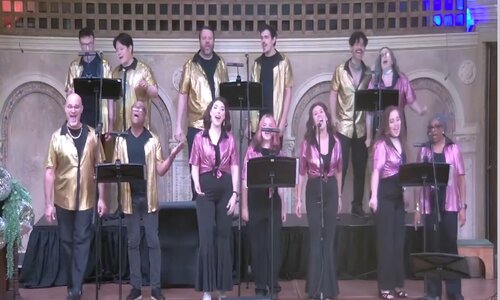
That is why many Christians were stunned to learn that Coral Gables Congregational United Church of Christ recently hosted what it called "The Gospel According to ABBA Worship" on May 3 -- a church service built around the music of the Swedish pop group ABBA.
According to reports and clips circulated online, the service featured ABBA songs woven into what church leadership described as worship. Even more troubling to many believers was the reported language used during prayer, invoking both "holy father" and "holy mother," reflecting the increasingly gender-fluid theology embraced in many progressive denominations.
Pastor Megan, one of the church leaders associated with the event, reportedly mocked critics who questioned whether secular disco music should be used as worship music at all. Rather than expressing concern over backlash from Christians, she stated she took pride in receiving such protest letters.
That response reveals something much deeper than a disagreement over music style. This is not really about ABBA.
It is about what progressive Christianity increasingly believes worship actually is.
Can Christians enjoy ABBA music? Of course. ABBA produced catchy songs that millions around the world have enjoyed for decades. There is nothing inherently sinful about listening to such music, provided the lyrics don't promote unbiblical values.
But entertainment and worship are not the same thing.
The Bible consistently presents worship as something sacred, reverent, and God-centered. Scripture warns repeatedly against blending the worship of God with worldly practices designed to entertain human desires. The issue is not whether ABBA songs are pleasant. The issue is whether secular disco hits about romance, heartbreak, and dancing are appropriate vehicles for glorifying a holy God during gathered corporate worship.
Many churches today seem unable -- or unwilling -- to distinguish between emotional stimulation and biblical worship.
And this latest controversy did not emerge in a vacuum.
The church is part of the United Church of Christ's "Open and Affirming" movement, a denomination-wide initiative fully affirming LGBTQ ideology, same-sex marriage, and gender identity doctrines that directly conflict with historic Christian teaching.
The broader United Church of Christ has long been at the forefront of progressive theological activism. In 1972, it became the first Christian denomination in America to ordain an openly gay minister. In 1985, the denomination formally called for non-discrimination policies regarding homosexuality, and by 2005, it became the first major Protestant denomination to endorse same-sex marriage nationally.
But the theological drift did not stop there.
Across the country, numerous UCC congregations have embraced practices that many traditional Christians view as fundamentally incompatible with biblical Christianity. Some churches have hosted drag performances in sanctuaries. Others have replaced traditional biblical language for God with explicitly gender-neutral or feminine terminology. Still others openly question foundational Christian doctrines surrounding sexuality, sin, repentance, and even the authority of Scripture itself.
In recent years, examples have multiplied.
Some UCC congregations have celebrated Pride Month with drag worship services and "queer theology" events. Others have displayed pride flags prominently over crosses and communion tables. Certain pastors within the denomination have publicly argued that biblical teachings on sexuality are outdated cultural relics rather than divine revelation.
Again, this is not merely a debate about style.
Church history is filled with disagreements over instruments, hymn styles, and musical traditions. Christians can reasonably disagree over whether worship should feature organs, guitars, or modern worship bands.
But transforming worship into themed entertainment centered around secular pop culture is something fundamentally different.
The danger is not simply that churches become "too modern." The danger is that worship ceases to be about God altogether.
Progressive churches often defend these events by claiming they help make Christianity more accessible, inclusive, or culturally relevant. But relevance has become a kind of false gospel in many churches -- a constant pursuit of cultural approval at the expense of biblical fidelity.
The irony is painful. In trying so desperately to appeal to the world, many churches end up offering the world nothing different from itself.
If church simply becomes another concert venue, another social activism hub, another affirmation center, or another entertainment experience, then why would anyone seek it out for spiritual truth?
The early church transformed the world not because it mirrored Roman culture, but because it stood apart from it.
Christians should absolutely engage culture. They can appreciate art, music, literature, and entertainment without fear. But the gathered worship of the church is supposed to be set apart. Scripture describes worship with words like reverence, holiness, repentance, truth, awe, and glory -- not irony, parody, or performance art.
What happened at this ABBA-themed service may sound amusing to some observers. But for many Christians, it represents something deeply sobering: a visible picture of how far parts of the modern church have drifted from historic biblical worship.
Because once worship becomes centered on pleasing people rather than honoring God, there is virtually no limit to where the church may eventually go next.
You can watch parts of the unfortunate service here to get a taste: