Why Do Progressive Churches Keep Hosting Drag Shows?
 By PNW Staff May 15, 2026
Share this article:
For many Christians, the growing number of drag shows being hosted inside churches and Christian schools is not just surprising -- it feels surreal. What once would have been unthinkable inside a sanctuary has now become a celebrated feature of progressive Christianity's public identity. And as Pride Month approaches, these events are becoming more visible, more frequent, and more openly defended.
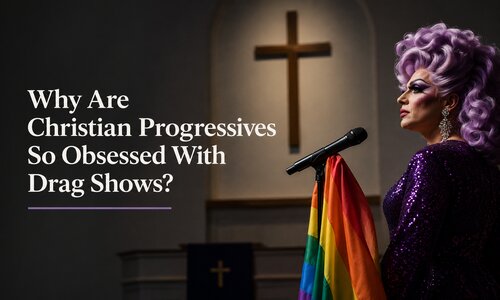
The latest example came from Hillhurst United Church, where a drag performance took place during a church service itself. Videos and posts from the event circulated widely online, reigniting debate about the direction of progressive Christianity and whether parts of the modern church are abandoning biblical authority altogether.
But this is not an isolated case.
In St. Charles Avenue Baptist Church, the church openly promoted its "4th Annual Drag Show Fundraiser" for Pride-related causes. Another progressive congregation hosted a "Drag Me to Church" event marketed as a "dragstravaganza of biblical proportions," with critics -- including some LGBT attendees -- saying it felt intentionally provocative and alienating.
Even Christian higher education is no longer exempt. Recently, Saint John's University and College of Saint Benedict faced backlash after hosting a "Drag Show Olympics." What shocked many Christians was not merely the event itself, but the administration's response. School officials defended it as being "in line with our Benedictine values."
That statement gets to the heart of the issue.
The debate is no longer simply about whether progressive churches want to "welcome" LGBT individuals. Historically, most churches -- even conservative ones -- have taught that all people are loved by God and welcome to hear the Gospel. The deeper question now is why some churches feel compelled to actively celebrate, showcase, and spiritually affirm behavior and identities that historic Christianity has traditionally viewed as incompatible with biblical teaching.
Why the obsession?
Because for many progressive Christians, affirmation itself has become the new gospel.
In much of progressive Christianity today, inclusion is no longer one value among many. It has become the central moral framework through which everything else is interpreted -- including Scripture itself. Passages once viewed as clear teachings on sexuality are now reinterpreted, minimized, or dismissed entirely in favor of modern cultural values surrounding identity and self-expression.
That is why drag performances are not merely tolerated in these environments. They are elevated.
Drag functions as a public symbol of rebellion against traditional sexual ethics, gender norms, and historic Christian doctrine. Hosting these events inside churches becomes a way for progressive congregations to signal to the broader culture: "We are not like those conservative Christians." In many cases, the spectacle itself is part of the point.
And spectacle matters in a declining movement.
Many progressive denominations across North America are experiencing steep membership decline and aging congregations. Public activism, political causes, and Pride-related events often generate media attention and cultural approval in ways traditional worship services no longer do. Drag shows create visibility. They generate headlines. They communicate ideological allegiance.
But there is also a deeper theological issue underneath all of this.
Historic Christianity teaches transformation through repentance. Progressive Christianity increasingly teaches affirmation through self-expression.
Those are radically different visions of the faith.
Scripture repeatedly calls believers to deny themselves, take up their cross, and follow Christ. The Christian life has always involved surrendering desires, identities, and behaviors to God's authority. Yet modern progressive theology increasingly flips that model upside down. Instead of conforming ourselves to Christ, Christianity becomes reimagined as affirming whatever identities individuals already possess.
This is why critics argue that many of these churches no longer resemble Christianity historically understood. The focus shifts from worshipping God to validating the self.
And yet, perhaps the most tragic part of this trend is the confusion it creates for young believers.
When churches celebrate things Scripture has historically warned against, it sends a message that biblical authority itself is negotiable. If two thousand years of Christian teaching can suddenly be overturned by modern cultural trends, many begin wondering what else can be redefined as well.
That question is already reshaping entire denominations.
As June approaches, Americans will likely see even more churches hosting Pride-themed worship services, drag performances, rainbow liturgies, and activist events. Supporters will call it inclusion. Critics will call it compromise. But either way, the movement is growing increasingly visible.
And for many Christians watching it unfold, the concern is no longer simply about drag shows.
It is about whether parts of the modern church still believe the Bible has authority at all.