
The Generation That Never Was: Vast Numbers Of Generation Z Lost To Abortion
 By PNW Staff May 05, 2026
Share this article:
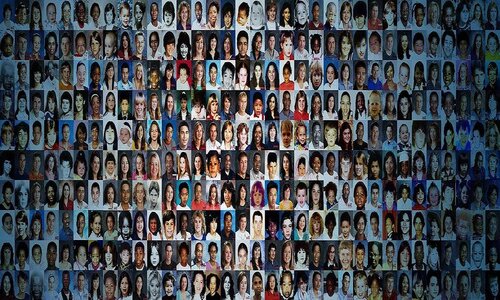
Seventeen million is not just a number--it is a silence.
It is the empty desks that were never filled, the voices that were never heard, the lives that never had the chance to begin. However one arrives at the statistics, the baseline reality is sobering: tens of millions of pregnancies in the United States alone have ended in abortion over the past several decades. That is not a marginal figure. It is not a rounding error in history. It is a population-scale absence--one that forces a difficult but necessary question: what has been lost?
The claim, discussed by Rachel Wilson on the Jack Neel Podcast, frames the issue in generational terms--suggesting as much as one-third of Generation Z (those born between 1997-2012) never made it to birth. While exact percentages can be debated endlessly, the broader implication does not require mathematical precision to understand. When the numbers reach into the tens of millions, the impact is no longer theoretical. It becomes civilizational.
Start with the most obvious dimension: human potential.
Seventeen million lives represent more than just individuals--they represent possibility multiplied across time. Within that number could have been doctors who discovered treatments, engineers who built new technologies, teachers who shaped future leaders, and parents who raised the next generation. The loss is not just immediate; it compounds. Each life that never begins also means future families that never form, grandchildren who are never born, and contributions that never materialize.
It is a ripple effect that stretches far beyond a single generation.
Economically, the consequences are becoming increasingly visible. Many developed nations, including the United States, are grappling with declining birthrates and aging populations. Fewer young people entering the workforce means fewer taxpayers supporting social systems, fewer innovators driving growth, and fewer hands to sustain the infrastructure of society. In response, governments often turn to immigration as a way to stabilize labor markets and economic output.
That solution may be practical, but it raises an uncomfortable question: what if the need for replacement had been less urgent in the first place?
This is not about assigning blame as much as it is about recognizing cause and effect. A society that reduces its own birthrate--whether through cultural shifts, economic pressures, or policy decisions--will inevitably face the downstream consequences of that choice. Labor shortages, demographic imbalance, and social strain do not emerge in isolation. They are the natural outcome of fewer people being born.
But beyond economics lies something deeper--something harder to quantify.
There is a cultural and emotional cost to absence. A generation is not just a collection of individuals; it is a shared identity shaped by relationships, experiences, and collective memory. Remove millions from that equation, and what remains is not simply smaller--it is different. Entire networks of friendships, communities, and families are missing. The world we know today is not just the result of who is here, but also who is not.
From a Christian perspective, this absence carries profound spiritual weight.
The Bible speaks consistently of life as intentional and known by God. In Psalm 139, the image is vivid: each person "fearfully and wonderfully made," formed with purpose and care. If that is true, then every lost life is not just a statistical reduction, but a story that was never told--a calling that was never fulfilled.
And yet, any honest conversation must also acknowledge the realities that surround abortion.
Behind every number is a woman facing a decision--often under pressure, uncertainty, or fear. Economic hardship, lack of support, and cultural messaging all shape these moments. If society is troubled by the scale of abortion, it must also confront the conditions that make it seem like the only option for so many. Addressing the outcome without addressing the causes will always fall short.
Still, the scale itself demands reflection.
Seventeen million. Even if one were to set aside debates over percentages or generational labels, that number alone is enough to pause. It represents a population larger than many countries--a vast, unseen absence that has quietly reshaped the trajectory of a nation.
What would those lives have added to the world? How would they have influenced culture, economy, faith, and family?
We cannot know.
But we can recognize that something significant has been lost.
The conversation around abortion is often framed in terms of rights, law, and personal autonomy. Those are important considerations. But there is another dimension that is too often overlooked--the cumulative impact over time. When decisions that affect individual lives are multiplied across millions, they do not remain individual. They become generational.
And generations shape history.
The world we inhabit today is not only defined by the people who are here, building, creating, and living--it is also defined by those who are not. The absence is invisible, but its effects are not. They are felt in the economy, in culture, in communities, and perhaps most deeply, in the quiet recognition that an entire generation of possibility never had the chance to unfold.
That is not a small thing.
It is a silence measured in millions.