
Meta's Face-Scanning Glasses Could Turn Everyday Life Into A Surveillance Grid
 By PNW Staff February 17, 2026
Share this article:
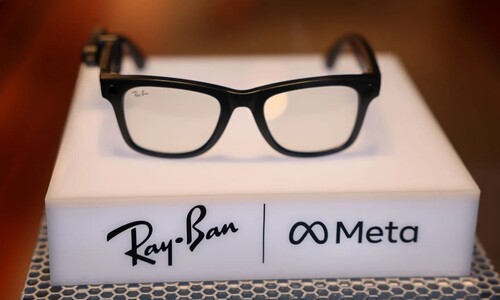
There are moments in technological history when a single product proposal reveals far more than a roadmap--it exposes a philosophy. The latest reporting about Meta's consideration of facial recognition in its camera-equipped glasses is one of those moments.
According to internal material obtained by The New York Times, company discussions included whether to launch the feature during a chaotic political climate when critics might be too distracted to resist. That detail alone transforms this from a gadget story into a societal warning.
Because this is not just about glasses.
It is about whether anonymity in public--one of the last remaining forms of everyday freedom--will quietly disappear.
The proposed technology would allow wearable devices to scan the faces of people nearby and generate biometric identifiers known as faceprints. Unlike passwords, these cannot be reset. Unlike credit cards, they cannot be replaced. Your face is permanent. Once captured and stored, it becomes a lifelong key that can unlock your identity anywhere the database exists. That means every street corner, café, airport, protest, classroom, or church gathering could become a place where your presence is silently logged.
Historically, surveillance required infrastructure: cameras mounted on buildings, monitored systems, centralized control. What makes this moment different is decentralization. If this feature launches, surveillance would no longer be something installed on society--it would be worn by society. Ordinary people would carry identification scanners on their faces. The watchers would not just be governments or corporations. They would be everyone.
And that is a civil liberties earthquake.
Privacy advocates have warned for years that biometric tracking represents a fundamentally different category of risk than traditional data collection. Companies can lose your email address or even your Social Security number and you can eventually mitigate the damage. But if your biometric identity leaks, there is no remedy. You cannot change your face. You cannot cancel it. You cannot request a new one from customer service. A stolen faceprint is permanent access.
Meta understands these stakes because it has already faced the consequences. When it operated facial recognition on its social platform, regulators and courts pushed back hard. The company agreed to a $5 billion settlement with the Federal Trade Commission over privacy violations tied in part to confusing biometric settings. It later paid hundreds of millions more in biometric privacy litigation and over a billion dollars in a separate state settlement. Those cases established a legal reality: biometric data is not just another data category. It is treated as uniquely sensitive because of the irreversible risk it carries.
Yet the new proposal suggests a shift from centralized scanning of uploaded photos to real-time identification of strangers in physical space. That is a magnitude change. It transforms surveillance from episodic to ambient--from something that happens occasionally to something that could happen constantly.
To grasp the social impact, imagine daily life under this system. You walk into a store. Someone nearby glances at you. Their glasses identify you instantly and display your name. Maybe your job. Maybe your social media profile. Maybe incorrect information tied to someone else's faceprint. You would not know it happened. You would not know who saw it. You would not know what database supplied it. The scan would leave no visible trace--but the data trail would exist.
That asymmetry is the core privacy danger: others can know you without you knowing them.
We have already seen how quickly surveillance infrastructure expands once it exists. When Amazon's Ring cameras spread across neighborhoods, many consumers initially saw them as harmless security tools. Only later did public debate intensify over law-enforcement access partnerships and data-sharing practices. The pattern is familiar: convenience first, scrutiny later.
But biometric wearables raise the stakes far beyond doorbell footage. They introduce identification, not just recording. Recording shows what happened. Identification tells who was there. Combine the two, and you do not just observe reality--you index it.
That capability carries chilling implications for free expression. Studies and historical precedent both show that people behave differently when they believe they are being watched. They speak less freely. They attend fewer controversial events. They avoid unpopular opinions. Surveillance rarely needs to punish dissent directly; the possibility of monitoring is often enough to suppress it. A society where everyone might be instantly identified by strangers is a society where spontaneous freedom becomes calculated exposure.
Supporters of biometric tech argue that benefits exist: locating missing persons, stopping criminals, verifying identity quickly. Those benefits are real. But history teaches that powerful tools rarely remain limited to their original purpose. Databases merge. Policies loosen. Access expands. What begins as safety can evolve into tracking, profiling, or discrimination--sometimes unintentionally, sometimes not.
That is why the reported internal discussion about timing matters so much. Launching a controversial technology when watchdog groups are distracted is not product strategy; it is risk strategy. It implies anticipation of backlash and a desire to minimize it. In other words, the concern is not whether the technology raises ethical questions--it is how to release it before those questions gain traction.
The real issue now is not whether face-recognition glasses can be built. They can. The issue is whether society decides there are lines that should not be crossed simply because something is technologically possible.
We are approaching a threshold moment. For decades, dystopian fiction warned about worlds where citizens could be identified anywhere instantly. Those stories once felt distant. Now they feel like product demos.
If wearable facial recognition becomes normalized, the shift will not arrive with alarms or announcements. It will arrive quietly, one pair of glasses at a time--until one day we realize the age of unobserved public life has ended.
And by then, it may be too late to take our faces back.