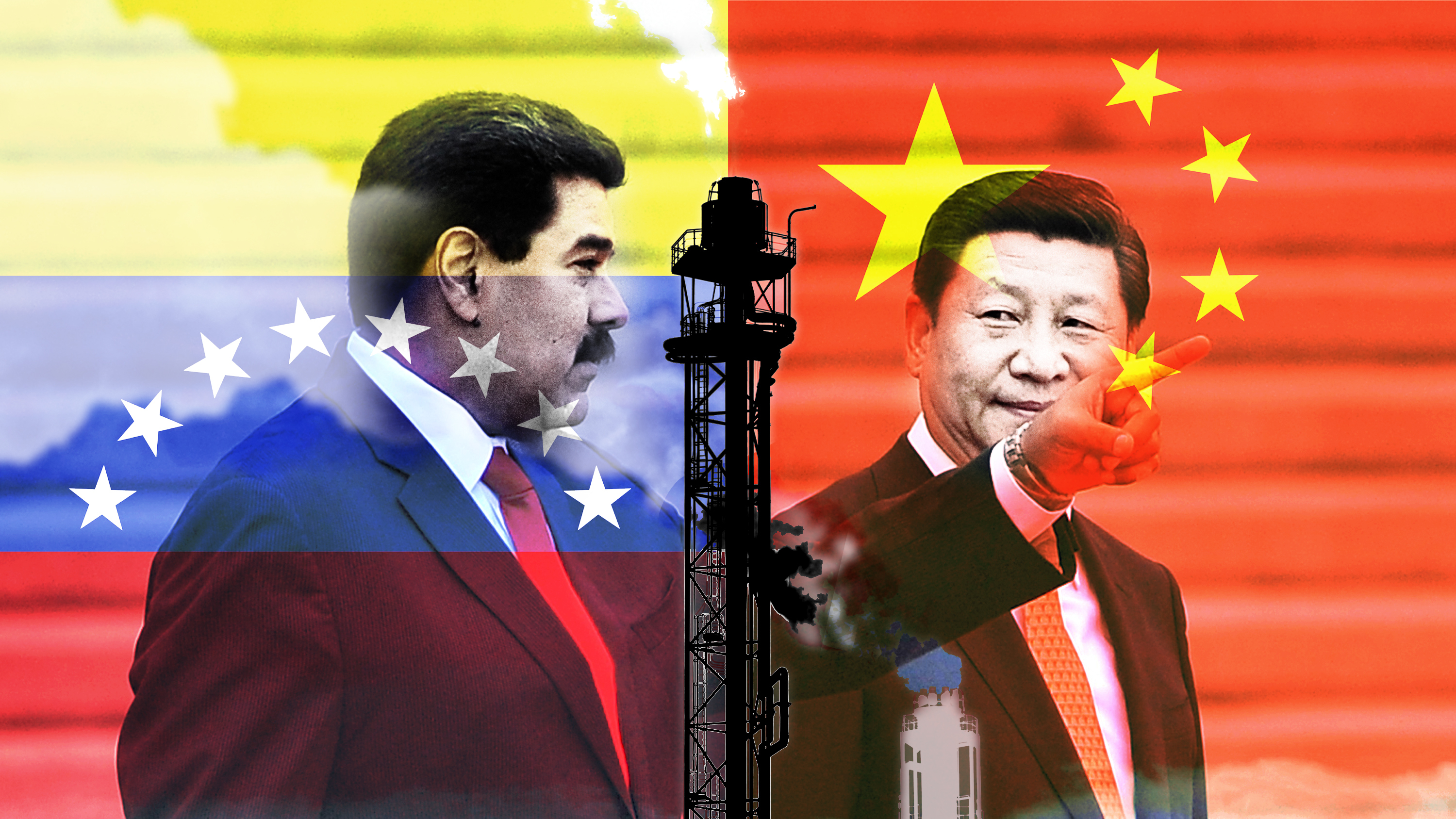
Venezuela, China, And The Oil Beneath It All: The Chessboard Just Tilted
 By PNW Staff January 06, 2026
Share this article:
The dramatic events that unfolded in Venezuela over the past few days have stunned the world. The U.S. capture of Nicolás Maduro is already being framed as a decisive moment--either a long-overdue intervention against an autocrat or a dangerous act of imperial overreach. But almost everyone is missing the far larger picture. What just happened in Venezuela is not a regional crisis. It is a geopolitical earthquake. And its shockwaves are already being felt in Beijing and Moscow.
This is not simply about Maduro. It is also about oil, power, precedent--and a global chessboard that just shifted in a way few fully understand.
From Washington's perspective, Venezuela has long been a strategic prize. It sits atop the largest proven oil reserves on Earth--more than Saudi Arabia--and has spent years drifting into the economic and military orbit of America's two greatest rivals. The Trump administration has gambled that by removing Maduro and reshaping Venezuela's government, it can push both China and Russia out of the Western Hemisphere in one bold stroke.
But gambles have consequences. And China and Russia are not minor stakeholders being brushed aside. They are furious because they have spent decades--and tens of billions of dollars--building Venezuela into a critical pillar of their global strategy.
Russia's investment has been overtly military and strategic. Over the past twenty years, Moscow sold roughly $20 billion in weapons to Venezuela and signed a major strategic partnership agreement as recently as May 7th. Venezuela was not just a customer; it was a foothold--a symbol that Russia could project power into America's backyard.
China's involvement runs even deeper. Beijing lent Venezuela more than $60 billion through oil-backed loans, turning the country into what many analysts quietly described as a Chinese economic colony. Venezuela became one of China's most important overseas energy suppliers, with Beijing purchasing more Venezuelan oil than the rest of the world combined.
Tankers carrying Venezuelan crude to China often take convoluted routes, involving ship-to-ship transfers and months-long journeys to obscure the oil's origin--an extraordinary effort that underscores just how vital those barrels are to China's long-term energy security.
This is why the timing matters. Just hours before Maduro was captured, Chinese diplomats were meeting with him in Caracas, reaffirming their commitment to a "strategic relationship" and a "multipolar world." From Beijing's perspective, this was not just a diplomatic embarrassment. It was a humiliation. A trusted partner was taken out immediately after China publicly reaffirmed its backing.
That context explains the unusually sharp language now coming out of Beijing. China has "strongly condemned" the U.S. action, calling it a blatant violation of sovereignty and international law, and has demanded Maduro's immediate release. Those demands will be ignored--but the anger will not dissipate.
And here is where the story turns truly dangerous.
Within China, social media commentary is already drawing uncomfortable parallels. The average Chinese citizen does not parse international law or nuanced justifications offered by Washington. They see headlines. They see a superpower using force to remove a government it dislikes. And many are now asking a simple, unsettling question: If the U.S. can do this in Venezuela, why can't China do the same in Taiwan?
The same logic echoes in Russia, where officials are openly condemning the action as armed aggression and calling for Maduro's release. From Moscow's point of view, how can the United States demand restraint or trust in negotiations over Ukraine after demonstrating that sovereignty is conditional when strategic interests are at stake?
Yes, there are differences. The U.S. will argue Maduro was illegitimate, corrupt, and dangerous. China and Russia will argue that such distinctions are irrelevant when force is used to topple a government. Precedent matters--not in law journals, but in public perception. And perception shapes domestic support for future action.
This is why Venezuela matters far beyond Latin America. It sits at the intersection of oil and power. Control over Venezuelan energy flows affects global markets, Chinese supply chains, and Russian influence. By moving decisively, Washington has effectively slapped both Beijing and Moscow in the face--and told them that decades of investment can be erased overnight.
An emergency UN Security Council session has already been called for. There will be speeches, condemnations, and diplomatic theater. But no resolution will undo what has been done. A line has been crossed.
Even if the U.S. Senate votes next week to restrict further military action, the precedent remains. The chessboard has changed. China's Venezuelan strategy lies in ruins. Russia's trust in Western diplomacy is further eroded. And the idea that power--not principle--ultimately decides outcomes has been reinforced in the minds of millions.
This is how great-power conflict escalates--not always through immediate war, but through accumulated grievances, perceived hypocrisy, and the slow normalization of force as policy. Venezuela may seem distant. But the ripples now extend to Taiwan, Ukraine, and every contested region where oil, power, and ambition collide.
We are no longer watching isolated crises. We are watching the opening moves of a much larger game. And history suggests that once the board is set like this, retaliation--one way or another--is only a matter of time.