
After Hamas: Can Trump's Gaza Plan Deliver Peace-Or Trouble?
 By PNW Staff September 03, 2025
Share this article:
As Israel presses forward toward conquering Gaza City, determined to finish what Hamas started on October 7, 2023, the stakes could not be higher. Two years after Hamas's brutal attack, Israel's leaders, from Netanyahu to top generals, are no longer negotiating partial deals or temporary ceasefires.
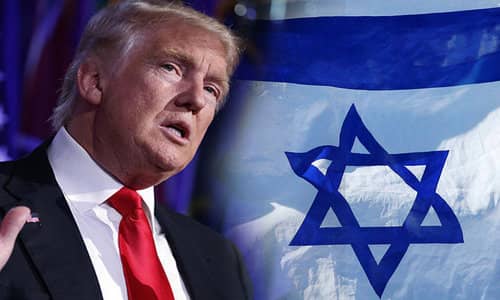
They are aiming for total victory--and the release of hostages. President Trump has signaled he wants a post-war timetable accelerated, raising the prospect of poetic justice: the defeat of Hamas two years to the day after it struck.
But the guns won't fall silent forever. The real question looms: what comes next? Will Gaza rise from the ashes as a place of peace, or will it remain a powder keg that threatens Israel and the region for decades?
The Trump "Riviera" Vision
Among the proposals circulating in Washington is the ambitious Gaza Reconstitution, Economic Acceleration, and Transformation Trust--GREAT. In essence, it's a plan to temporarily relocate Gaza's 2+ million residents, provide cash incentives, rent subsidies, and food assistance, and turn the devastated strip into a futuristic hub of luxury, technology, and tourism.
Think AI-powered cities, electric vehicle factories, and beach resorts--the "Riviera of the Middle East." Funding would come primarily from private and international investment, rather than U.S. taxpayers.
On paper, it's dazzling: a war-torn territory reborn, economic opportunity for Palestinians, and most importantly, a secure Gaza with Israel no longer under constant threat. It's a bold, almost audacious vision. Could it succeed where past proposals have failed?
The Hidden Challenges
The GREAT plan is far from a magic wand. For starters, "voluntary" relocation is complicated. Even with $5,000 payments, rent subsidies, and food aid, uprooting millions from their homes is fraught with resistance, anger, and resentment. Many Gazans will see this as coercion, no matter the euphemisms. A population that feels dispossessed--even temporarily--can become fertile ground for the very extremism Israel hopes to eliminate.
Then there's the threat beyond Gaza's borders. Even if Hamas is dismantled, Israel cannot control the hearts of every militant in Lebanon, Syria, or the Sinai. Kidnapping attempts, rocket fire, and terrorism could flare up for years. History shows that political borders cannot erase ideology or hatred overnight. Any postwar plan must reckon with an enduring local population that will always harbor anti-Israel sentiment.
Moreover, regional politics are volatile. Arab leaders, Gulf states, and global powers have their own agendas. While the plan emphasizes integration into regional economic corridors and the Abraham Accords framework, any misstep could spark backlash. Even with the veneer of "development" and private investment, the Great Trust risks becoming a lightning rod for criticism--and possibly violence.
Another challenge is sustainability. Transforming Gaza into a thriving tech and tourism hub requires not just money, but stability, governance, and buy-in from the people. Ten years of U.S.-led trusteeship is a long time--and there is no guarantee that trained local police and administrators will be able to maintain order when external oversight diminishes. The plan presumes a level of compliance and optimism that may be unrealistic in a region scarred by decades of conflict.
Nieve or Bold?
So is the GREAT plan naive or visionary? It is both. It is bold because it dares to imagine peace in a place long defined by war. It is bold because it puts U.S. and Israeli ingenuity into action, using investment and infrastructure rather than endless negotiation. Yet it is naive if it underestimates the depth of enmity and the complexity of regional dynamics.
For conservative Christians who support Israel, the appeal is clear: a secure Israel, a chance to break the cycle of terror, and a framework for long-term regional peace. But the risks cannot be ignored. The spiritual reality is that sin and hatred do not vanish with development projects. Human hearts must change, or the cycle of violence will continue.
As Israel prepares for its decisive offensive, and as Trump's team debates the postwar future, one truth remains: victory on the battlefield is only the first step. The real test will be whether leaders can craft a solution that is just, sustainable, and wise--or whether the next generation will inherit another cycle of conflict.