A Church In Decline Must Ask: What Makes It Different?
 By PNW Staff October 26, 2026
Share this article:
The United Methodist and Episcopal Churches are losing members. But their deeper crisis is not simply that people are leaving. It is that, in too many places, the church has worked so hard to resemble the world that people no longer see why they should stay.
The United Methodist Church lost about 174,000 U.S. members in 2025. The Episcopal Church has lost nearly half a million members over the past decade. Attendance has fallen sharply in both denominations.
These figures are more than a bookkeeping problem. They should force an uncomfortable question: When a church abandons the authority of Scripture and adopts the culture’s answers, what is left that the culture needs?
A Gospel Rewritten To Win Approval
For years, leaders in these denominations have treated biblical teaching as an obstacle to be managed—something to reinterpret, set aside or apologize for whenever it conflicts with modern opinion.
The Episcopal Church’s consecration of Gene Robinson, an openly gay man, as bishop in 2003 marked a defining rupture. In the United Methodist Church, a long fight over same-sex marriage and gay clergy ended with the denomination removing its longstanding restrictions in 2024. Thousands of congregations had already left after years of conflict over whether the denomination would uphold its rules.
These decisions were presented as progress. But progress toward what? A church that follows the age wherever it leads may win approval from the age, at least for a moment. It also tells people that Scripture’s authority lasts only until the culture objects.
When the church adjusts its teaching to match the latest social consensus, it stops speaking with the authority of God’s Word. It becomes another institution reflecting the values of its time—and those values can be found everywhere.
Why Attend A Church That Says The Same Thing?
The church was never called to give the world a religious version of its own philosophy. It is not meant to repeat that people are basically good, that self-fulfillment is the highest goal, or that society can heal itself by changing its language and expanding its approval.
Scripture offers a different diagnosis and a different answer. It speaks of sin, repentance, judgment, forgiveness and salvation through Jesus Christ. That message can confront people. It can challenge the culture and the church itself. But remove that message, and the church has little left to offer beyond familiar slogans and community programs.
The world does not need the church to echo its assumptions. It needs the church to tell the truth—even when that truth is unpopular.
Look At The Pews
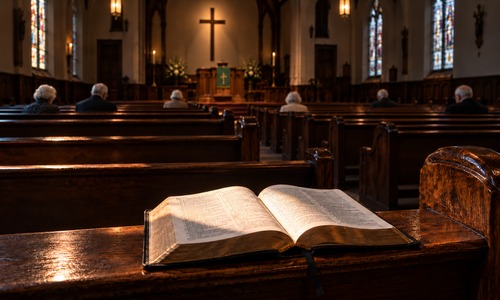
Watch livestreams from many struggling congregations and the decline is visible: empty rows, sparse attendance and few younger faces. In too many churches, the congregation appears to be growing older while the next generation is missing.
No one can predict the future of every congregation. But a church that cannot reach younger people, teach them Scripture and give them a faith worth carrying forward has reason to worry. If today’s pattern continues, many of these churches may have few people left to fill their pews in another 20 years.
The answer cannot be another effort to make the church more fashionable. Younger people can find the world’s philosophy everywhere. They do not need a church that offers the same answers with hymns and stained glass.
A Denomination Unraveling
The UMC’s membership decline follows years of bitter conflict and thousands of congregations leaving the denomination. This weekend, members of Highland Park United Methodist Church, a prominent Dallas congregation, are voting on whether to sever ties with the UMC. Its leaders say they want to preserve the church’s ministry, self-governance and Wesleyan tradition.
The Highland Park vote is another sign of a denomination still coming apart. One of the UMC’s largest congregations is asking its members whether to cut ties with the church it has belonged to for generations. Years of theological conflict and bitter disputes over authority have left the denomination fractured—and still unable to offer a clear, shared vision of what it believes.
The Episcopal Church faces its own long decline. Its leaders can point to broader changes in American religious life, and those changes are real. But that cannot excuse a failure to ask whether a denomination’s theological direction has helped make it less compelling to people searching for truth.
Let The Institution Go If The Faith Is Gone
If a church has abandoned Scripture, its survival is not automatically a victory. Preserving a denomination’s name, buildings and bureaucracy cannot matter more than preserving the faith it claims to represent. If the institution has traded biblical conviction for cultural approval, its decline may be a warning—and even an opportunity for repentance.
Pull up livestreams from many of these churches and look at the pews. Some sanctuaries appear half-empty, and the people visible are overwhelmingly older—often it seems that nearly everyone is over 60. If a congregation has not brought in a younger generation, who will be there to carry it forward? At that rate, many of these churches may be gone in 20 years.
The loss of a church can grieve its members and damage the communities it served. But keeping an institution alive while its defining message disappears is not renewal. The church’s calling is not to mirror the world, but to proclaim Christ, teach the Word and offer the hope the world cannot provide.
A church in decline must ask what makes it different. If it has no answer beyond being a more religious version of the culture, then the empty pews are not the deepest problem. The deeper problem is that the church has forgotten why it exists.