
Watchdog Warns: One-Third Of Country At Elevated Risk Of Blackouts This Summer
 By Naveen Athrappully/Activist Post May 23, 2024
Share this article:

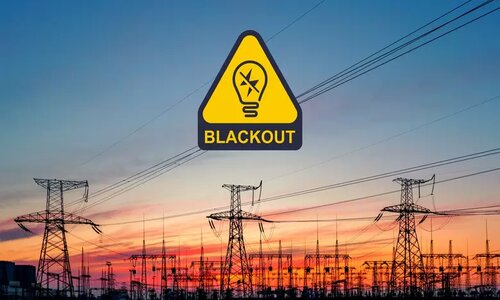
Parts of America could face difficulties in meeting electricity demand during the summer season, with renewable energy sources like wind and solar power posing a potential risk to reliable power supply, according to a report by the North American Electric Reliability Corporation (NERC).
The NERC report classifies several parts of the country as facing an "elevated" risk of summer electricity reliability for the upcoming June-September period.
Elevated risk means there is "potential for insufficient operating reserves" when the region faces above-normal demand conditions. Such regions include parts of Louisiana, Texas, New Mexico, Arizona, California, Illinois, and Iowa. The determination of elevated risk is based on various factors, including potential low wind or solar energy condions that could lead to a lower electricity supply.
The North American power bulk power system (BPS) is made up of six regional entities--Midwest Reliability Organization (MRO), Northeast Power Coordinating Council (NPCC), ReliabilityFirst (RF), SERC Reliability Corporation (SERC), Texas Reliability Entity (Texas RE), Western Electricity Coordinating Council (WECC)--with elevated risk upcoming in certain regions.
Midcontinent Independent System Operator (MISO), which manages the electricity capacity market, operates in 15 U.S. states, including Texas, Illinois, Montana, Arkansas, and Kentucky. MISO is expected to have "sufficient resources" to meet normal summer peak demand, the NERC report said.
However, if MISO were to face above-normal peak demand conditions at a time when wind and solar output is lower than expected, it could be "challenging" for the transmission organization to meet demand.
"Wind generator performance during periods of high demand is a key factor in determining whether there is sufficient electricity supply on the system or if external (non-firm) supply assistance is required to maintain reliability."
The Texas RE ERCOT (Electric Reliability Council of Texas) interconnection, which handles approximately 90 percent of Texas' electrical load, faces potential emergency conditions in summer evening hours "when solar generation begins to ramp down."
Under certain grid conditions, power transfers from South Texas to the San Antonio region have to be restricted, which contributes to "elevated risk" of supply. Such grid conditions occur when "demand is high and wind and solar output is low in specific areas, straining the transmission system."
In areas serviced by the WECC covering 14 states, including California and New Mexico, challenges to electricity reliability are estimated to be under "above-normal demand and low-resource conditions." Such a situation happens when there is low solar output or below-normal imports, the report said.
Commenting on the NERC report, Michelle Bloodworth, the CEO of America's Power, a partnership of industries involved in producing electricity from coal, said the assessment reveals that the American electricity grid is "increasingly reliant on weather-dependent sources of electricity" like solar and wind power.
This puts "one-third of the country at elevated risk of blackouts this summer," she said, adding that such risks are only poised to increase because of regulations imposed by the U.S. Environmental Protection Agency (EPA).
"Delayed coal plant retirements are playing a key role in supporting grid reliability. However, this is only a temporary band-aid because EPA regulations will cause more coal retirements that cannot be delayed. These regulations, especially the recently announced Carbon Rule, increase the chance of blackouts," Ms. Bloodworth said.
"With electricity demand exploding, our country needs a strategy for ensuring a healthy long-term electricity supply that doesn't depend on the sun and the wind and is not dictated by EPA regulations."
New EPA Rule
The NERC report comes as the EPA announced a suite of final rules on April 25 aimed at reducing pollution from fossil fuel-fired power plants.
The new standards require all coal-fired plants that intend to run in the long term as well as all new baseload gas-fired plants to curb 90 percent of their carbon pollution.
The energy regulations have been criticized by Jim Matheson, CEO of the National Rural Electric Cooperative Association, a trade association of electrical cooperatives.
"The path outlined by the EPA is unlawful, unrealistic, and unachievable," he said. "It undermines electric reliability and poses grave consequences for an already stressed electric grid. This barrage of new EPA rules ignores our nation's ongoing electric reliability challenges and is the wrong approach at a critical time for our nation's energy future."
Senator Shelley Moore Capito (R-W.Va.) called EPA rules proof that President Biden has "doubled down" on his plans to shut down the "backbone of America's electric grid."
"Electricity demand is set to skyrocket thanks in part to the EPA's own electric vehicles mandate, and unfortunately, Americans are already paying higher utility bills under President Biden," she said.
"Despite all this, the administration has chosen to press ahead with its unrealistic climate agenda that threatens access to affordable, reliable energy for households and employers across the country."
Originally published at Activist Post