
Hezbollah/Iran Now Control Lebanon: Multi-Front War With Israel Coming
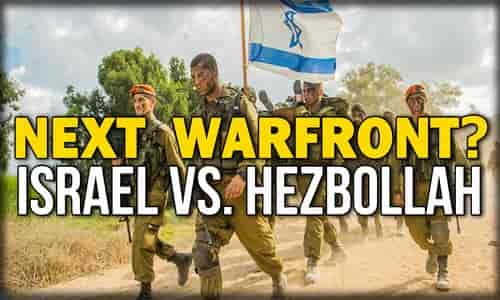 By Ben Cohen/Algemeiner.com May 08, 2018
Share this article:

The results of Lebanon's elections on Sunday have effectively placed the country's institutions in the hands of Iran and its local proxy Hezbollah, a leading Middle East analyst warned during an interview with The Algemeiner on Monday.
"When Hezbollah wins, it means that Iran has won in Lebanon," observed Hanin Ghaddar -- a prominent Lebanese journalist who is now a visiting fellow at the Washington Institute for Near East Policy think tank - as results showed Prime Minister Sa'ad Hariri's pro-western Future Movement losing up to one-third of its parliamentary seats.
In a nationally-televised address on Monday, Hezbollah's leader, Hassan Nasrallah, hailed what he called a "great moral and political victory for the resistance that protects the country."
But Ghaddar said that election observers had reported at least 7,000 violations during the poll. In one case, Joumana Haddad, a Christian journalist and women's rights activist who stood as a parliamentary candidate in Beirut, alleged outright electoral fraud when an earlier decision to recognize her victory in the capital's District 1 was hurriedly rescinded.
Ghaddar -- a former managing editor of the independent news outlet NOW Lebanon, as well as a correspondent for leading newspapers including An-Nahar and Al-Hayat -- presented a bleak portrait of Lebanon's immediate future following the dramatic gains by Hezbollah-allied candidates in the 128-seat parliament.
Ghaddar noted that while Hezbollah had been the dominant force in previous Lebanese governments, there was one key difference with Sunday's poll. "In the past, Hezbollah had to make military threats" to ensure that its will was carried out, she said. "Today, they have the state institutions."
The results had graphically demonstrated the widespread skepticism in Lebanon regarding the effectiveness of electoral contests, Ghaddar noted, during a decade that has witnessed the influx of more than one million refugees from the war in Syria alongside economic stagnation. "People do not believe that voting and elections are tools for change," she said.
Ghaddar emphasized that a critical factor enabling Hezbollah's election victory was the strikingly low turnout. Just 49.2 percent of Lebanon's 3.6 million eligible voters turned up at the polls -- the last elections, in 2009, drew 54 percent.
Sunday's results will still permit Hariri to form a government, but he will be compelled to make a number of concessions to Hezbollah -- historically, his avowed enemy -- in the process, Ghaddar said.
The vote in Beirut was notably "a big defeat for Hariri," she continued, with Hezbollah underlining its triumph in the Lebanese capital by placing its flag on the memorial statue to Rafik Hariri -- Sa'ad's father, who was assassinated in a terrorist car bombing in 2005.
Pessimism about the outlook for political change has been compounded by the realization among many Lebanese "that nothing is going to change internally because everything depends on regional dynamics," Ghaddar said.
With Hezbollah's political strategy based on "eliminating serious resistance" at the same time as "co-opting" leading non-Shia politicians like Hariri, the Sunni prime minister, and Michel Aoun, Lebanon's Christian president, Ghaddar forecast that Lebanon's "military and judicial institutions is where they will now be exerting their power."
"They will form a government that looks the same, but Hezbollah will be in control at the core," Ghaddar stated. "Today's Sa'ad Hariri is not the Hariri who became PM in 2009."
In such an environment, Hezbollah can easily deflect any opposition to its military maneuvers that might come from within the Lebanese armed forces. "Hezbollah already controls decision making in the army, but there is no one to challenge them anymore," Ghaddar observed.
Iran's escalation of its war against Israel through Syria will inevitably be intensified through Lebanon as well, Ghaddar said, but not immediately.
"Lebanon is now very easy ground for them to attack or retaliate against Israel, and they want to, but they are not ready today," Ghaddar said. "Today, the Israeli air strikes are hurting Iran in Lebanon, but as long as those strikes don't jeopardize their achievements, they will let it go."
Those Iranian "achievements," Ghaddar explained, are the consolidation of Hezbollah's power in Lebanon and that of Syrian dictator Bashar al-Assad in Damascus, as well as an "uninterrupted land bridge" stretching from Iran's borders through Syria.
The Iranians will continue to play for time until they are no longer convinced that any strike on Israel will lead to a war they will lose, Ghaddar said. "When the Iranians have finally consolidated power in Syria, Lebanon and in Iraq, which has parliamentary elections on May 12, when they have a strong presence on the border with Israel, and when they have precision-guided missiles in place -- then they will be ready," she warned.
Originally published at Algemeiner.com - reposted with permission.