New Technology, Same Old Eugenics
 By John Stonestreet/Breakpoint.org March 18, 2016
Share this article:
If there were an award for the most impactful technology that almost no one has heard of, the winner could be CRISPR.
Now, CRISPR has nothing to do with refrigerator drawers that keep fruits and vegetables fresh. No, it's the latest technology tempting us to try our hand at playing god.
CRISPR stands forget ready, it's a mouthful "clustered regularly interspaced short palindromic repeat." And all Gods people said, "Huh?" Well, originally, it referred to a series of repeats of the base sequences in the DNA of bacteria.
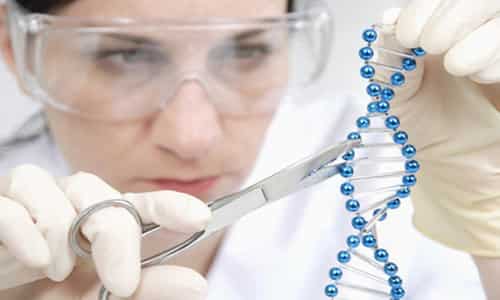
To simplify this complicated story, geneticists are learning how to use the CRISPR in bacteria to edit the genome of other, far more complicated life-forms. As Nobel Laureate Craig Mello told National Public Radio, CRISPR "essentially allows you to change a genome at will to almost anything you want. The sky's the limit."
Well, maybe not yet, but theres little doubt that CRISPR technology allows scientists to manipulate and edit genes much more quickly and at a much lower cost. With CRISPR they can potentially modify a gene and move it to another cell or even to another animal.
No wonder Mello calls it "really exciting."
And another word for it would be "troubling." Not because using technology to potentially prevent serious illness is a bad thing, but because of the historically proven reality that we most likely wont stop there.
In a recent Washington Post article, writer Robert Gebelhoff was asked, "Whats the difference between genetic engineering and eugenics?" His answer: "not much, really."
After all, technology like CRISPR holds forth the promise of one day being able to "eliminate genetic disorders in humans." While we can all get behind eradicating terrible genetic disorders like Tay-Sachs and Cystic Fibrosis, the fact remains that
editing out inheritable traits from the human population
is in fact what the eugenics movement was all about.
As Gebelhoff points out, "The field of genetics has always had an uncomfortable link to eugenics," which he defines as "the science of improving people through controlled breeding." As Edwin Black chronicles in his definitive history of the eugenics movement, "War Against the Weak," after the horrors of the Third Reich, eugenics was re-named "genetics" to rid itself of the taint of things like mass involuntary sterilization.
But scientists have never given up the idea of using "genetic engineering as a means of perfecting the human species." And the only restraint on what Black has dubbed "newgenics" seems to be "Well, just dont be a Nazi about it."
And thats not a joke. Scientists like the Nobel Laureate Joshua Lederberg and evolutionary biologist J.B.S. Haldane maintain that what Haldane called "positive eugenics" was different because "No living person would be eliminated from the gene pool." Instead, "society could guide human development by eliminating negative traits and encouraging desirable ones through genetic engineering."
Phrases like "no living person," "negative traits," and
desirable traits
strongly suggest that the sanctity and dignity of all human life doesnt play much of a role in "newgenics." "Positive eugenics" is at odds with the idea that theres "a moral, social and physical advantage in allowing diversity to flourish within the human gene pool."
Instead, whats "negative" and what's "desirable" will be determined by a worldview that prizes physical perfection above all, only considers temporal criteria of value, and uses some image bearers as tools and eliminates othersmuch as we saw in the 1997 film, "Gattaca." This war on the weak, like the original one, will be waged by people claiming to act in the name of the public good under the mantle of scientific objectivity.
What could possibly go wrong?
Originally published at breakpoint.org. Reposted with permission