
Lessons From Europe: How Islamic Mass Migration Has Reshaped The Continent
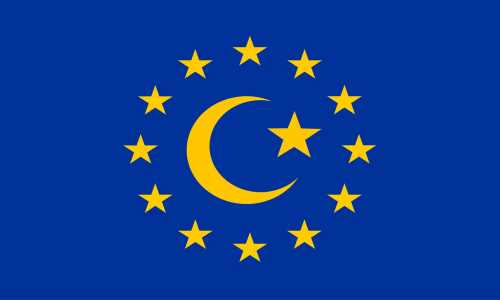 By SA McCarthy/The Washington Stand April 21, 2026
Share this article:
A top Republican official is warning that mass immigration from Third World -- in particular, Muslim -- countries risks destroying American society, pointing to Europe as an example. In a Fox News interview last week, Florida Governor Ron DeSantis (R) emphasized the danger posed to American culture and society by the growth of Islamic Sharia law, brought to the country by immigrants from majority-Muslim countries.
He urged state legislators to pass laws banning the Muslim practice of first-cousin marriage, which he described as "obviously part of cultures that are antithetical to American values." The governor also touted his own actions to ban the practice of Sharia law. "We don't want to end up like Europe, where they have no-go zones, where you have these little subcultures where this stuff is imposed," he said. "That now is totally off the table in Florida."
"They've really shot themselves in the foot," DeSantis said of Europe, reflecting on the historic ties the U.S. shares with many European nations. "You look at, like, the United Kingdom -- that has been our best ally historically. We obviously came from there, our culture grew out of English culture, our Constitution and laws, all this stuff, very tight bond," he continued. "But I think what they've done -- and other European countries have done -- they've imported in mass numbers people who don't want to be British, don't want to be French. They want to take where they came from, and they want to change those countries to reflect things like Sharia."
"So if the reason why we have been allied with them for so long is because we have strong political and cultural bonds, well, those have eroded because of decisions that they have made," the Florida governor said of immigration policies enacted by European leaders. "I think what they have done, particularly on mass immigration, has been suicidal. We can't make those mistakes in the United States."
Over the past 25 years in particular, much of Europe has been transformed by mass immigration from the Middle East and the Third World, bringing with it chain migration, Muslim culture and Sharia law, increased crime and violence, and a swollen burden on European welfare systems.
Some European nations -- notably, Hungary and Poland -- have resisted the immigration influx, but the governments of many European nations have not only permitted but, in many cases, openly encouraged and facilitated mass immigration. This increase in immigration, much of which comes from Middle Eastern and Third World countries, has eroded the fabric of European society and threatened to entirely decimate European culture, erasing all that once bonded the U.S. to the "Old World."
The shift in population makeup has been drastic, particularly as the birth rates of native Europeans have declined catastrophically and the birth rates of foreigners -- particularly Muslims -- rise well above replacement level. The statistics cited below are drawn from Eurostat, the Organization for Economic Co-operation and Development (OECD), and national statistics offices.
Germany
At the dawn of the 21st century, Germany's foreign-born population stood no higher than eight million, in a nation of nearly 83 million. The vast majority of foreigners were fellow Europeans who had moved to Germany for a variety of reasons: work, study, family, culture. Fewer than three million foreigners hailed from the Middle East or the Third World; of these, the majority (nearly two million) were guest-workers from Turkey or their families, along with some from Morocco and the first few "refugees" from Iraq and Afghanistan.
By the end of 2025, roughly one-fifth of Germany's population was foreign-born, amounting to nearly 20 million people. Those from the Middle East and the Third World accounted for over half of the foreigners. Most of those came from Turkey (millions), Syria (approximately one million), Afghanistan (over 450,000), Iraq (over 250,000), and hundreds of thousands more from Africa and southern Asia.
Like much of the Western world, Germany's native birth rate has plummeted, falling to a total fertility rate (TFR) of less than 1.5 by the end of 2020. Meanwhile, the TFR of Germany's foreign-born population sits at well over 3.0, with foreigners accounting for over 20% of births in Germany by the end of 2020.
In 2015, then-Chancellor Angela Merkel instituted an "open door" asylum policy, which saw over one million "refugees" from majority-Muslim countries enter Germany within a single year. At the time, the European Union's Dublin Regulation mandated that EU member states process asylum applications according to the first country that the asylum claimant enters.
For example, a Syrian national could not enter France and claim asylum in Spain; France would process his asylum claim and agree to give him refuge. Merkel abandoned that policy for Syrian and Afghan asylum claimants, allowing other EU member states to shift the asylum claims to Germany and encouraging asylum claimants to cross Germany's borders.
In 2003, the EU had enacted its Family Reunification Policy, which allowed member states to either welcome the immediate family members (spouses and children under the age of 18) of non-European nationals living in those member states, or else to restrict the immigration of family members on the basis of national security concerns or a lack of housing and welfare. Merkel suspended Germany's application of this policy.
The results of this mass immigration, framed by Merkel and her political allies as "humanitarian," has been disastrous for Germany. On New Year's Eve 2015 and New Year's Day 2016, within a year of Merkel's "open door" policy taking effect, over 1,200 German women reported being raped or sexually assaulted. The majority (roughly 650 sexual assaults and 22 rapes) occurred in Cologne, with hundreds of other sexual assaults and rapes taking place in Hamburg, Düsseldorf, and Frankfurt. Cologne Police Chief Wolfgang Albers confirmed at the time, "The crimes were committed by a group of people who from appearance were largely from the north African or Arab world."
Albers resigned days later, citing a loss of public trust. His successor, Jürgen Mathies, argued against speculation that the mass sexual assaults and rapes had been planned or organized in advance, instead suggesting that sexual assault and rape were simply common features of African and Arab culture. Out of an estimated 500 assailants in Cologne, only 153 suspects were identified: 149 were foreign nationals, while the remaining four were teenagers born in Germany to foreign parents; more than two-thirds of the assailants were from Algeria or Morocco; nearly half (44%) were asylum claimants.
Late in December of 2016, Anis Amri, a 24-year-old Tunisian national whose asylum application was rejected by Germany (after he had already been let in), shot and killed Polish truck driver ?ukasz Urban and stole his truck. Amri proceeded to drive the vehicle at high speed through the Breitscheidplatz Christmas Market in Berlin, killing 11 people and injuring 56 others.
In the aftermath of the attack, it was discovered that the Muslim Amri had pledged allegiance to the Islamic State (ISIS). Less than a decade later, Saudi Arabian national Taleb Al-Abdulmohsen rented a BMW SUV and drove, at high speed, through a Christmas Market in Magdeburg, killing a nine-year-old boy and five women and injuring over 300 people.
According to the Bundeskriminalamt (BKA), Germany's federal police force, over 40% of crimes are committed by foreign nationals, while nearly half (49.3%) of violent crimes are committed by foreign nationals. Another BKA report determined that while 163 out of every 100,000 Germans are suspects of violent crimes, that rate goes up by more than 10 times for foreign nationals: 1,740 per 100,000 for Syrian nationals and 1,722 for Afghan nationals, for example.
France
In 2001, the foreign-born population of France was below six million, of which less than half were from the Middle East or the Third World. The majority of non-Western immigrants were from Algeria, a former French colony, with others from Morocco, Tunisia, and sub-Saharan Africa.
By the end of 2025, the foreign-born population had ballooned to about 10 million, accounting for roughly 13% of the population. Nearly half (45%) are from Africa, while many come from the Middle East. While the TFR among the native French is 1.6 (the highest in the EU), the TFR among foreigners is approximately 2.5, with nearly one-third of births in France attributed to foreigners.
Like Germany, France has also liberalized immigration policies over the years, bringing in large numbers of foreign workers and expanding asylum and refugee caps. Also like Germany, France has experienced a surge in Islamist violence. In 2012, Algerian Mohammed Merah attacked and killed three French soldiers before targeting a Jewish school in Toulouse and killing three children and a rabbi.
In 2014, three police officers were attacked and injured at the Tours police station by a knife-wielding man shouting, "Allahu Akbar." Just a few weeks later, brothers Saïd and Chérif Kouachi, linked to al-Qaeda in the Arabian Peninsula, forced their way into the offices of the Charlie Hebdo magazine and opened fire with automatic weapons, killing 12 people and injuring 11 others.
From 2015 onwards, Islamist terrorist attacks became nearly commonplace in France. Outside the Louvre, an Egyptian national attacked three police officers with a knife, wounding two. Yassin Salhi set off an explosion in a factory outside Lyon after decapitating a factory worker and mounting his head on a fence, accompanied by Islamist supremacist writing. Five people were injured in a shooting and stabbing attack by an Islamist extremist aboard a train bound for Paris. Later in the year, 137 were killed and over 400 more injured in a series of orchestrated shootings and suicide bombings, mostly concentrated in Paris and the surrounding suburbs.
Since then, well over 100 people have been killed in Islamist terrorist attacks in France -- from Catholic priests on their way to celebrate Mass to teachers and schoolchildren -- and hundreds more have been injured.
Spain
Under the military leader and head of state Francisco Franco, Spain hosted very few Muslims, only two or three thousand per year, who were forced to repatriate at the end of the year. By 2001, the Muslim population in Spain -- hailing predominantly from Morocco, Pakistan, and Senegal -- was nearing one million. By 2008, it stood at 1.2 million.
Today, nearly one fifth of Spain's population is foreign-born, of which nearly three million are Muslims. A series of amnesties enacted in the 1980s and 1990s, following Franco's death and the ascent of a secular (and now socialist) government, normalized Muslim immigration and encouraged increased illegal immigration, so that Spain has an abnormally high rate of illegal immigration today.
As with other European nations, Spain has seen an increase in Islamist terrorist attacks and related crime, starting with the 2004 Madrid train bombings, which claimed the lives of nearly 200 people and injured more than 2,000. A subsequent series of terrorist attacks in Barcelona left 15 dead and 120 injured. Of course, Islamist violence isn't always bombings, stabbings, shootings, and decapitations. More recently, 25-year-old Spaniard Noelia Castillo was euthanized after a suicide attempt linked to a series of gang rapes reportedly perpetrated by Muslim immigrants.
United Kingdom
Muslim gang rape has proven to be a widespread problem in Britain. In 2001, the U.K. counted fewer than two million Middle Eastern and Third World immigrants as residents, predominantly originating from Pakistan, India, and Bangladesh, but with many Muslim arrivals from the Middle East. That share has more than quadrupled in the succeeding years, so that more than eight million British residents now come from Pakistan, India, Nigeria, Bangladesh, and the Middle East.
In the 2000s and early 2010s, EU immigration policies and the liberalized asylum policies of then-Prime Minister Tony Blair saw immigration to the U.K. rise sharply. That rise slowed following Brexit and the U.K.'s departure from the EU, but the post-Brexit "point system" allowed many illegal and temporary immigrants to earn a lengthier stay, and the governing Conservative Party did little to halt illegal immigration or enact deportations.
In 2005, Islamist suicide bombers attacked London Underground trains and double-decker buses, killing 52 and injuring nearly 500. Nigerians Michael Adebolajo and Michael Adebowale ran over British Army Fusilier Lee Rigby with their car before using a knife and a meat cleaver to stab him to death, drag his body into the street, and hack him to pieces. In 2017, Khalid Masood drove a car through a crowd on London's Westminster Bridge, killing four people and injuring nearly 50, before fleeing his car and fatally stabbing a police officer.
Months later, an Islamist suicide bomber targeted Manchester Arena following a concert, killing 22 and injuring over 1,000. Just weeks after that, Pakistan-born Khuram Shazad Butt, African "asylum seeker" Rachid Redouane, and Moroccan Youssef Zaghba drove a car through a crowd on the London Bridge before exiting the vehicle and launching a stabbing spree. Eight people were killed, and 48 were injured, including 21 who were critically injured.
In recent months, much attention has also been given to "grooming gangs." Since the 1990s, police and government prosecutors have been reportedly made aware of gangs of Muslim immigrants (mostly Pakistani in origin) and the practice of grooming and serially raping young white girls, especially teenagers.
According to official reports, the rape gangs would typically approach girls in public places, or sometimes have a young Muslim boy of about the girl's age approach her or begin a relationship with her, and then entice her using gifts and favors, such as fast food and meals out, cigarettes, alcohol, and perfumes or clothes. The girl would then be raped, often violently, and frequently shared with other members of the family, including brothers, cousins, and uncles. Girls were often threatened afterwards and, in some cases, were coerced into drug dependency so that the rape gangs could maintain control over the girls.
According to the British government, various police departments refused to record the ethnicity of rape gang members. Numerous cases were either not investigated thoroughly or not investigated at all. The few cases that were referred for prosecution were never prosecuted.
Current Prime Minister Keir Starmer was, at the time, the director of the Crown Prosecution Service. Louise Baroness Casey of Blackstock, who led the government's official inquiry and audit into the rape gangs, wrote that authorities "shied away from" investigating or reporting the crimes, with many of those interviewed suggesting that they did not want to be labeled racist.
Member of Parliament (MP) Sarah Champion, who represented Rotherham, where over 1,400 girls were raped by Muslim gangs, suggested that up to one million girls could have been raped nationwide. MP Rupert Lowe, founder and leader of the immigration hardline party Restore Britain, suggested that every single "foreign rapist" ought to be identified, arrested, and deported. Government inquiries into the issue have not yet revealed the full scope of the abuse.
Conclusion
Mass immigration, particularly from majority-Muslim countries, has decimated Europe. DeSantis's warning against the potential for first cousin-marriage pales in comparison to hundreds and thousands of deaths and injuries from terrorist attacks and hundreds of thousands of girls systematically gang-raped. Policies banning the practice of Sharia law only treat a symptom, not the disease, which can only be addressed through stringent immigration control, as Europe has learned far too late.
Originally published at The Washington Stand