Gambling On Death: How Global Conflict Became Just Another Market To Trade
 By PNW Staff March 03, 2026
Share this article:
War used to be something nations feared. Now, for a growing corner of the internet, it's something to wager on.
As missiles flew and headlines broke surrounding Iran's escalating conflict and the death of Iranian leader Ayatollah Ali Khamenei, betting markets surged with activity. On some platforms, traders speculated not only on whether Iran would retaliate or whether the United States would intervene -- but on whether Khamenei himself would remain in power. Screens lit up with percentages, odds, and price swings as if this were a championship game rather than a geopolitical earthquake.
"It's insane this is legal," said Sen. Chris Murphy, reacting to reports that individuals profited from wagers tied to the unfolding crisis. Murphy has since vowed to introduce legislation aimed at banning such markets, arguing that people "are profiting off war and death."
His outrage underscores a rapidly intensifying debate: Have prediction markets crossed a moral line?
What Are Prediction Markets?
Prediction markets operate on a simple premise: participants buy and sell contracts based on the likelihood of future events. If you believe an event will happen -- say, a candidate winning an election, inflation hitting a certain rate, or a ceasefire being declared -- you purchase shares that pay out if that outcome occurs. The price of those shares fluctuates in real time, reflecting collective belief about probability.
Platforms like Kalshi -- which is federally regulated by the Commodity Futures Trading Commission -- argue they provide a data-driven way to forecast outcomes. They describe themselves not as sportsbooks but as financial exchanges where information is priced into markets.
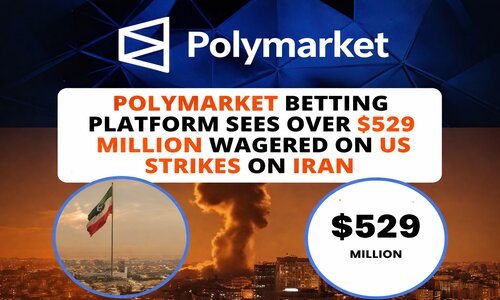
Offshore platforms like Polymarket, which are not currently operational within the United States regulatory framework, have gone further. On Polymarket, an anonymous user reportedly cashed out more than $553,000 following geopolitical bets tied to Iran's leadership turmoil.
Prediction markets have expanded well beyond elections. They now include economic indicators, Supreme Court rulings, regulatory decisions, and -- increasingly -- war.
The Moral Hazard of Betting on War
At first glance, prediction markets may appear to be harmless forecasting tools. But when the underlying subject is death, invasion, or regime collapse, the dynamic changes.
Betting on war transforms tragedy into opportunity. The human cost becomes a price chart. If a strike appears imminent, contracts surge. If a leader is rumored to be targeted, odds shift by the minute. In theory, this is merely probability aggregation. In practice, it is commodifying catastrophe.
That discomfort intensified after speculation swirled around wagers linked to the downfall of Venezuelan strongman Nicolás Maduro during recent unrest. Now, with the latest conflict involving Iran serving as a stress test, critics argue these platforms are normalizing a disturbing premise: that geopolitical violence is just another tradeable asset.
Kalshi has stated it does not allow markets directly tied to death and refunded users after controversy surrounding contracts tied to Khamenei's status, citing regulatory limitations. CEO Tarek Mansour has emphasized that "regulated prediction markets are not allowed to do war markets." Yet the line between "leadership change" and "death" can blur quickly in volatile regions.
And offshore platforms face even fewer guardrails.
Insider Information: A Ticking Time Bomb
Beyond the moral debate lies a more explosive concern: insider knowledge.
Financial markets strictly prohibit trading on material nonpublic information. Yet prediction markets tied to military action or political upheaval create enormous temptation. If someone within a defense department, intelligence agency, or political circle had advance knowledge of a strike, assassination, or regime change -- the ability to quietly place a bet and profit would be unprecedented.
Rep. Mike Levin warned that prediction markets "cannot be a vehicle for profiting off advance knowledge of military action."
History suggests the temptation is real. Over the past year, multiple professional athletes were investigated or disciplined for involvement in sports betting controversies, highlighting how insider access can distort markets. When players, referees, or team insiders influence outcomes, the integrity of the system collapses.
Now scale that concept globally. What if the "game" is war?
Imagine an official aware of a planned airstrike or intelligence operation placing a discreet bet on escalation odds. The financial incentive to act -- or to leak information -- becomes entangled with national security. The mere perception of that possibility erodes public trust.
Gambling or Investing?
A new trade group, Gambling Is Not Investing, led by former Trump acting Chief of Staff Mick Mulvaney, argues that rebranding wagers as "prediction" or "trading" misleads consumers and bypasses state-level gambling protections.
"Gambling products -- regardless of what you call them -- must follow established state and tribal laws," Mulvaney said.
Many states rely heavily on regulated sports betting revenue, and they argue prediction markets are encroaching on their domain without the same responsible gaming safeguards. But the debate goes deeper than tax policy.
When citizens can financially benefit from instability abroad, the psychological incentive structure shifts. Peace becomes less profitable than conflict. Stability becomes boring. Volatility pays.
A Dangerous Frontier
Supporters argue prediction markets enhance transparency, aggregate information efficiently, and provide signals policymakers can study. Critics counter that when contracts hinge on assassination, invasion, or regime collapse, the ethical calculus changes.
We have entered an era where someone can refresh an app and watch the odds of war tick up in real time -- and decide whether to "buy."
Markets are powerful tools. But not every human tragedy should be transformed into a ticker symbol. When death becomes a trade and geopolitics becomes a parlay, we risk blurring the line between civic engagement and moral detachment.
The question now confronting lawmakers is not just whether these markets are legal.
It's whether a society should allow its citizens to gamble on war -- and possibly profit from knowing it's coming.