The Giants Were Real: How An Egyptian Papyrus Strengthens The Biblical Record
 By PNW Staff February 02, 2026
Share this article:
Every so often, archaeology taps the brakes on modern skepticism and forces an uncomfortable question back onto the table: What if the Bible was telling the truth all along? A recently resurfaced examination of an ancient Egyptian papyrus--Anastasi I--has reignited one of Scripture's most controversial claims: that giants once walked the earth. For Bible-believing Christians who take the Old Testament at face value, this discovery does not feel like a stretch. It feels like confirmation.
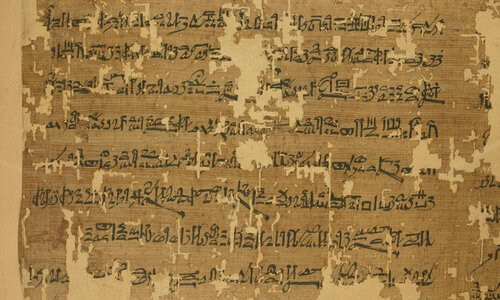
The Anastasi I papyrus, dated to roughly the 13th century BC and housed in the British Museum since 1839, describes encounters with the Shosu (or Shasu) people--nomadic groups in the Levant--who were said to stand "four cubits or five cubits" tall. Using the Egyptian cubit of approximately 20 inches, this places these individuals anywhere from 6'8" to over 8'6" tall. In a world where the average man stood closer to 5'2", these figures would have been terrifyingly large.
The text itself is written as a letter from the scribe Hori to another scribe, Amenemope, warning of dangerous terrain and hostile enemies. Hori describes a narrow mountain pass "infested with Shosu concealed beneath the bushes... fierce of face," emphasizing not only their size but their threat. While critics argue the letter is satirical--an instructional mockery meant to embarrass a fellow scribe--the warning is oddly specific. Height measurements, locations, and military logistics are not the usual tools of parody. As the Associates for Biblical Research note, accuracy is central to the letter's purpose.
For readers of Scripture, the implications are immediate. The Bible repeatedly speaks of unusually large peoples inhabiting Canaan and surrounding regions. Genesis 6:4 famously declares, "There were giants in the earth in those days; and also after that, when the sons of God came in unto the daughters of men." Numbers 13:33 recounts the Israelites encountering the sons of Anak, describing themselves as "grasshoppers" by comparison. Deuteronomy 3 records King Og of Bashan--so large his bedstead measured over 13 feet long.
The Hebrew term Nephilim has long been debated, but many conservative scholars maintain it refers to literal beings, not metaphor. This view is not fringe. Dr. Michael Heiser, often cited by skeptics, actually affirmed the supernatural interpretation of Genesis 6. While Heiser questioned whether great height alone proves giant status, he firmly taught that the "sons of God" were divine beings--fallen angels--who transgressed their proper domain, producing hybrid offspring. His hesitation was not theological but archaeological: height alone, he argued, is not enough. Yet the nature of the Nephilim, in his view, was unquestionably supernatural.
Other respected Bible scholars go further. Chuck Missler consistently taught that the Nephilim were a genetic corruption of humanity, explaining why the Flood was necessary to preserve the Messianic bloodline. Gary Wayne, in The Genesis 6 Conspiracy, documents parallels between biblical giants and ancient pagan traditions across cultures, arguing that the Bible preserves the original account while others preserve corrupted echoes. Scholars at Answers in Genesis, including Tim Chaffey, defend a literal reading of the Anakim, Rephaim, and Nephilim as real people groups with extraordinary physical traits.
Extra-biblical evidence continues to pile up. Egyptian Execration Texts reference "ly anaq"--a striking parallel to the biblical Anak. Reliefs from the Battle of Kadesh depict Shasu captives towering over others. A Canaanite tablet mentions Rapiu, king of eternity, ruling in Ashtaroth and Edrei--the very cities associated with Og and the Rephaim. As Christopher Eames of the Armstrong Institute notes, the convergence of names, places, and titles is difficult to dismiss as coincidence.
Skeptics counter that no giant skeletons have been found. But absence of evidence is not evidence of absence--especially when Scripture itself says the Nephilim were largely wiped out through divine judgment and war. Archaeology is fragmentary by nature. Entire civilizations are known only by scraps of pottery and half-erased inscriptions.
The British Museum cautiously frames Anastasi I as a military document, not a supernatural testimony. That is fair. But history has a way of whispering truths it does not fully understand. The papyrus does not need to prove angels fell from heaven to validate Scripture. It only needs to show that ancient peoples outside the Bible recorded encounters with unusually large, fearsome tribes in the very regions Scripture describes.
For believers, the takeaway is not triumphalism but reverence. The Bible does not shy away from the supernatural because reality itself is supernatural at its roots. The God who parted seas and raised the dead is not constrained by modern discomfort with angels, giants, or judgment. As Jesus said, "If they do not hear Moses and the prophets, neither will they be persuaded though one rise from the dead."
Sometimes, though, God allows the stones--and even papyrus--to cry out anyway.