
The Muslim Boom: How Islam Is Quietly Transforming Our Cities
 By PNW Staff November 19, 2025
Share this article:
America is changing. Not overnight, but steadily, and in ways many Christians are only beginning to notice. One of the most significant shifts is the rapid growth of Islam -- a faith that, through its adherents' numbers, civic engagement, and cultural practices, is increasingly shaping American communities. This is not a call to fear or hatred; it is a call to awareness and spiritual preparedness.
Demographics Tell the Story
Islam in America is growing -- both through higher birth rates among Muslim families and through immigration from countries such as Afghanistan, Pakistan, Somalia, and various parts of Africa. Younger, family-oriented populations, combined with steady migration, ensure that Muslim communities will continue to expand in numbers and visibility.
Recent surveys highlight the scale of this growth: The U.S. Mosque Survey, conducted by the Institute for Social Policy and Understanding (ISPU) in collaboration with Faith Communities Today, found 2,769 mosques across America in 2020, a 31% increase from 2010. New York alone hosts over 720,000 Muslims, and at least 15 states have Muslim populations exceeding 100,000.
Texas has emerged as a particularly dramatic example. The 2020 ISPU survey recorded 224 mosques in the state, up from 166 in 2010 -- a 35% increase. Online directories today list as many as 330 mosques in Texas as of 2025. Reports indicate 47-48 new mosques have opened since 2023 alone, including large clusters in Dallas-Fort Worth and Houston.
Alongside these places of worship, Islamic schools such as Brighter Horizons Academy in Irving (1,700 students) and the Islamic School of Irving prioritize Quran memorization and community-centered religious education. Projects like Good Tree Academy, serving 400 students since 2024, reflect the rapid establishment of Islamic institutions that reinforce cultural identity. There is even a new development known as "The Meadow" (originally called "Epic City"), an all-Muslim community advancing despite political pushback.
These developments are publicly recognized. The Democrat-led Texas House recently introduced HCR18 to designate May 2025 as "Muslim Heritage Month," citing the state's Muslim population and over 330 mosques. Even Houston's mayor celebrated the opening of a new Ismaili mosque, praising the "greatness" of both the community and the city -- statements reflecting an increasingly normalized celebration of Islamic culture.
Political Influence on the Rise
Growth in numbers translates into influence. Across the U.S., dozens of Muslim candidates have run for positions ranging from school boards to judgeships, and several have won office. Muslim voters often vote as a bloc, meaning even a small but organized population can shape local elections where other communities are divided. While victories are modest today, the trend is clear: as communities grow, their civic influence does too.
The Sharia Courts Question
Reports of Sharia courts in Texas, particularly in Dallas-Fort Worth, have raised concern. While these are described as voluntary Islamic arbitration panels without binding legal authority, their existence and expansion underscore a larger reality: communities are creating structures for civil and family matters grounded in Islamic principles. Even voluntary, these systems reflect a broader cultural organization that can influence neighborhood norms and expectations.
Governor Greg Abbott has signed legislation explicitly prohibiting the establishment of Sharia courts in Texas. Yet, how this law is being implemented -- and how it intersects with these voluntary Islamic arbitration panels -- remains unclear. Many within the Islamic community continue to operate these courts under the guise of mediation or civil arbitration, leaving questions about oversight, compliance, and the long-term impact on local communities.
Urban and Cultural Transformation
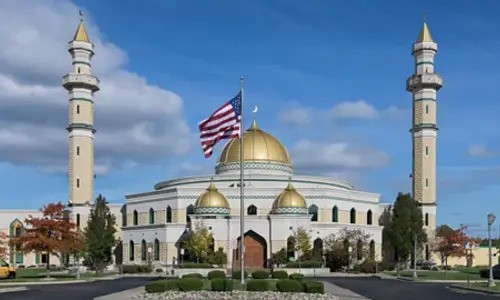
Examples abound of cultural shifts when Muslim populations reach critical mass. Minneapolis became the first major U.S. city to allow the Muslim call to prayer, or "azan," to be broadcast before dawn and after sunset, requiring a city council amendment of noise ordinances. Dearborn, Michigan, is now over half Muslim, hosting the country's largest mosque and multiple Islamic centers.
These communities show that growth is not only demographic but structural -- influencing public life, schools, and social norms. Internationally, London's experience mirrors this pattern: hundreds of former Christian churches have become mosques, and Sharia councils operate as advisory bodies, demonstrating how demographic weight shapes cultural practices.
A Christian Perspective
Pointing out these trends is not an act of fear or Islamophobia. Any worldview -- atheism, humanism, Marxism, or Islam -- can transform communities when its adherents grow in number and cohesion. Christians must recognize that communities reflect the beliefs of their citizens, and shifts in faith inevitably bring shifts in culture. Our concern is spiritual and cultural, not personal. Ephesians 6:12 reminds us that our true adversary is not human beings but spiritual forces seeking to mislead. Islam, like any worldview rejecting Christ, carries moral and spiritual implications for society.
How Christians Should Respond
Our response must be grounded in faith, not panic. We are called to witness boldly and lovingly, to share the Gospel with neighbors, friends, and even those of differing faiths. Parents must disciple children in Biblical truth, ensuring the next generation can stand firm. Churches must equip communities to engage culture wisely.
Beyond politics and schools, Islamic influence can shape social norms, charitable activity, and interfaith alliances. Halal food options, modest dress, and religious accommodations increasingly enter public life. The growth of Muslim communities, their institutions, and their cultural infrastructure ensures that influence will continue to expand -- and Americans of faith must understand it, respond wisely, and act with spiritual clarity.
America faces a quiet transformation. Islamic growth is inevitable in part, driven by birth rates, immigration, and community organization. Cultural influence follows quickly. Christians are not called to fear, but to vigilance: to teach, disciple, and witness, ensuring that the Gospel continues to shape both hearts and communities. The time to prepare is now -- spiritually, culturally, and morally.