
Calculating The 'Price' Of U.S. Support For Israel
 By Jonathan Tobin/JNS.org August 27, 2018
Share this article:

It's likely that even U.S. President Donald Trump's most ardent pro-Israel supporters were stopped in their tracks when they heard or read his remarks delivered on Tuesday night in West Virginia.
On a day when the political world was transfixed by the criminal convictions of two former high-ranking Trump aides, the president delivered one of his typical stream-of-consciousness speeches that covered a host of topics, including Middle East policy.
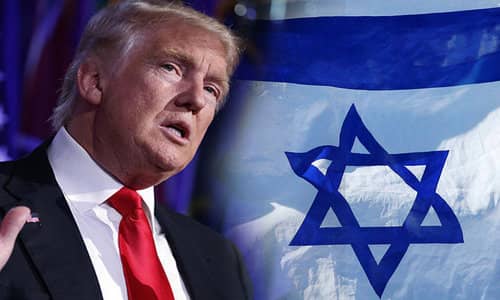
While speaking of his decision to keep his promise to move the U.S. embassy to Israel from Tel Aviv to Jerusalem, Trump also made it clear that it was part of a broader strategy to broker peace with the Palestinians.
Trump indicated that as a result of this gift to Israel, the Jewish state would have to "pay a higher price" in the talks that he hopes will follow the unveiling of the peace plan that has been drafted by presidential son-in-law and senior adviser Jared Kushner and other administrative staff.
"If there's ever going to be peace with the Palestinians, then this was a good thing to have done. We took it off the table. In past negotiations, they never got past Jerusalem. Now Israel will have to pay a higher price because it's off the table. The Palestinians will get something very good, because it's their turn next," said the president.
That means that if Israel is going to retain an undivided Jerusalem as its capital, the "something very good" that is coming to the Palestinians is undoubtedly an offer of an independent state in the West Bank.
The question is whether that will turn out to be too high a price for Israel to have paid. To some Israelis, the answer to that question is an adamant "yes."
Many on the Jewish right have assumed that the two-state option was a dead letter. After so many Palestinian rejections of peace and with hundreds of thousands of Jews living across the "green line," the idea of Trump resurrecting the concept is a bitter blow.
And yet, it's likely that Israeli Prime Minister Benjamin Netanyahu isn't losing too much sleep about any of this.
That's not just because John Bolton, Trump's National Security Advisor, who by coincidence was visiting Israel this week, sought to downplay the idea that the embassy relocation was a quid pro quo for future concessions to the Palestinians when asked about it the next morning.
As Netanyahu already knows, the party that will really decide how high the price Israel will pay for Jerusalem or anything else in a putative peace deal isn't Trump, Bolton or Kushner. It's Palestinian Authority leader Mahmoud Abbas.
If Netanyahu isn't all that worried, it's because Abbas has never been serious about peace. He walked away from past offers that were more generous than anything he could get from Trump and Netanyahu. The compromises that would be required in signing a peace deal of any kind would make Abbas and his Fatah Party vulnerable to attacks from his Hamas rivals.
Abbas made that clear when his spokesman said that the only compensation the P.A. wants from the United States is a declaration that eastern Jerusalem will be the capital of a Palestinian state--something that Trump has again said he has taken off the table. No serious observer thinks the Trump plan has any chance of success.
But that doesn't mean Israelis should ignore Trump's comments.
For many on the Jewish right, the Trump administration has been a new golden age, especially after the eight tense years of the Barack Obama presidency. Trump has kept his promise on Jerusalem, and the Palestinians' angry refusal to deal with his foreign-policy team has encouraged some Israelis to believe that they have a blank check from America that they can spend as they please.
That has led some of Netanyahu's coalition partners to think they can push through a partial or complete annexation of the West Bank that would forever end any prospect of a Palestinian state. Some in Netanyahu's cabinet were also laboring under the delusion that Trump would recognize Israel's annexation of the Golan Heights, especially since no one in their right mind is even thinking of handing the strategic plateau back to a Syria occupied by Iran and Hezbollah.
They're wrong on all counts.
Even in the improbable event of a serious negotiation with Abbas, Trump is unlikely to seriously pressure Netanyahu. As the president has indicated, he will never be more interested in a deal than the parties involved, so as long as the Palestinians aren't interested, the Israelis have little to be concerned about.
By the same token, the notion that Trump is going to foreclose even the theoretical chance of a two-state deal is a fantasy. He is too interested in maintaining good relations with Sunni Arab states like Saudi Arabia and Egypt to acquiesce to the dreams of the Israeli right and overturn a status quo that at least preserves the chance of peace in the future. As Bolton indicated, the same is true about the Golan.
The diplomatic balance of power has shifted in Israel's favor, but not so far as to allow the United States to approve of the extension of full Israeli sovereignty over the territories. That's a complication that even Trump wants no part of. Unlike some of his political allies, Netanyahu seems to know this and will tread carefully so as not to endanger relations with a friendly president.
Like the remarks about a "high price," that understanding is a bitter disappointment to some who thought Trump would realize all of their dreams about annexation. Even the most favorable American administration is not going to tell the Arab world that the Palestinians will never get a state outside of the one they already have (in all but name) in Gaza.
Yet rather than attack Trump for this message, the Jewish right needs to sober up. Trump has gone farther than any other U.S. president to support Israel's position, but he is never going to give them everything they want.
Originally published at JNS.org - reposted with permission.