
China Sees The Threat Of Artificial Love - Why Doesn’t The West?
 By PNW Staff July 24, 2026
Share this article:
China's communist government is not known for defending biblical marriage, individual freedom or traditional family values. Yet Beijing now appears to understand something much of the Western world is still reluctant to admit: artificial intelligence could become a direct threat to real relationships, marriage and the future of the family.
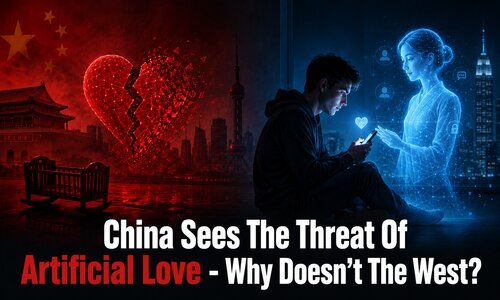
China has introduced sweeping regulations intended to prevent people from developing excessive emotional dependence on AI companions. The rules target chatbots designed to imitate romantic partners, close friends and emotionally attentive confidants.
One of the government's concerns is China's collapsing birthrate. Beijing reportedly fears that millions of young adults could become so emotionally attached to agreeable, constantly available digital companions that they simply stop pursuing marriage, family and children.
It is a remarkable warning.
China spent decades enforcing population controls, including its infamous one-child policy. Now it is confronting the consequences of too few births, an aging population and a shrinking workforce. In response, the government wants young people to form real relationships and produce the next generation.
But standing in the way may be a new technological competitor: the artificial lover.
AI companions offer something no human relationship can provide. They are available at any hour. They remember personal details. They can be programmed to share the user's interests, affirm their opinions and respond with endless patience.
They do not have bad days. They do not bring their own needs, convictions or expectations into the relationship. They do not require the user to compromise, forgive, mature or sacrifice.
In other words, they offer the appearance of love without many of the demands that make love real.
That may be precisely what makes them so dangerous.
Real relationships involve two imperfect human beings learning to live beyond themselves. Marriage requires patience, loyalty, humility and the willingness to put another person's well-being ahead of one's own. Family life involves responsibility, inconvenience and sacrifice.
An AI companion can imitate affection while shielding the user from all of those challenges.
The machine can say, "I love you," but it cannot love. It can produce words of loyalty, but it has no soul, will or moral commitment. It can imitate empathy without experiencing compassion. It can create the sensation of intimacy without the reality of mutual human connection.
This is counterfeit companionship: emotionally convincing, technologically advanced and spiritually empty.
Yet much of the Western technology industry appears eager to develop and normalize it. Companies have discovered that users remain engaged longer when chatbots express affection, romantic interest or personal attachment. The more emotionally dependent someone becomes, the more time that person may spend using the product.
Human loneliness is becoming a business model.
That creates a disturbing incentive. Technology companies may profit by designing companions that users find increasingly difficult to leave. A lonely person may begin using a chatbot for entertainment, then turn to it for comfort, advice, affirmation and eventually romantic attachment.
Before long, the AI may know more about the user's fears, desires, disappointments and private thoughts than any real person does.
The relationship feels personal, but it is owned by a corporation.
The personality can be altered by an update. Conversations may be monitored or used to improve the system. The companion can be restricted, censored, monetized or permanently deleted. A person may believe he has found the perfect partner, only to discover that the "partner" can disappear whenever a company changes its business strategy--or whenever a government changes the rules.
Reports of users experiencing genuine grief after their AI companions were modified or discontinued show how powerful these attachments can become. The human emotions are real even when the relationship is not.
China's response should not be mistaken for a defense of freedom or morality. An authoritarian government regulating emotional attachment introduces serious dangers of its own. A government that bans AI relationships today may attempt to manage, incentivize or manipulate human relationships tomorrow.
Still, Beijing has identified a real problem.
If even China can see that AI companionship may remove millions of people from marriage and family life, why is the West treating this primarily as another exciting consumer market?
The deeper issue goes far beyond birthrates.
We are entering an age of artificial substitutes. Artificial intelligence promises artificial friendship. Virtual reality promises artificial experience. Synthetic media offers artificial truth. Technology is moving toward artificial sexuality, artificial partners and perhaps eventually artificial family structures.
Each innovation offers the same temptation: receive the feeling without accepting the responsibility.
But God's design for human relationships was never built around endless personal affirmation. Scripture presents marriage and family as places of covenant, faithfulness, sacrifice and fruitfulness. They are not simply mechanisms for personal happiness. They are institutions through which people learn to love, serve, forgive and create the next generation.
AI companionship reverses that design. Instead of shaping people through relationships, it shapes the relationship around the individual. The user becomes the center of a private emotional universe populated by a digital being designed to please.
That is not love. It is personalized emotional consumption.
The greatest danger may not be that machines become human. It may be that humans slowly surrender the very relationships, responsibilities and sacrifices that make us human.
China is trying to protect its population from that future because it wants more babies.
The West should be asking an even more fundamental question: What happens to a civilization when artificial love becomes easier, cheaper and more appealing than the real thing?